Last updated: 28 May 2026
In 30 seconds: which tomato for which dish
The four reference Italian tomatoes are not interchangeable. San Marzano DOP is an elongated plum tomato, low in seeds, with firm flesh and 4.5-5 Brix: it is the tomato for long sauces and the true Neapolitan pizza, used peeled or as passata. Datterino is small, oval, very sweet (7-9 Brix): perfect raw, in fast pasta sauces and on gourmet pizza. Pachino IGP groups several Sicilian types (cherry, vine, smooth round, ribbed): balanced, ideal in salads and bruschetta. Ciliegino is the small round cherry tomato, sweet and juicy: salads, garnish, oven confit.
Quick rule: for pizza and long-cooked sauce choose San Marzano (peeled or passata); for fresh, salad and raw choose Datterino, Pachino or Ciliegino. Below you find the comparison table, dish-by-dish guidance, the difference between San Marzano DOP and the others, the peeled-vs-passata-vs-fresh question, FAQ and where to buy in Switzerland.
Comparison table: San Marzano DOP, Datterino, Pachino IGP, Ciliegino
| Feature | San Marzano DOP | Datterino | Pachino IGP | Ciliegino |
|---|---|---|---|---|
| Shape | Elongated plum, 6-8 cm | Small oval, date-like | Round/cherry/vine | Small round, 2-3 cm |
| Sugars (Brix) | 4.5-5 Brix | 7-9 Brix | 6-8 Brix | 6-8 Brix |
| Acidity (pH) | 4.2-4.5 (medium-low) | 4.0-4.3 (low, sweet) | 4.2-4.5 (balanced) | 4.2-4.5 (balanced) |
| Flesh / skin | Thick flesh, few seeds, easy-peel skin | Firm flesh, thin skin | Crunchy flesh, medium skin | Juicy flesh, thin skin |
| Calories | 18-20 kcal / 100 g | 22-26 kcal / 100 g | 18-22 kcal / 100 g | 18-22 kcal / 100 g |
| Best use | Pizza, long sauce, peeled, passata | Raw, fast sauce, gourmet pizza | Salad, bruschetta, raw | Salad, garnish, oven confit |
| Form sold | Peeled, passata, fresh | Fresh, semi-dried, in cans | Fresh, on the vine | Fresh, on the vine |
Which tomato for which dish
The choice of tomato changes the result more than any other ingredient. Here is the operational guide for a professional kitchen.
| Dish | Ideal tomato | Form | Why |
|---|---|---|---|
| Neapolitan pizza | San Marzano DOP | Peeled, hand-crushed | Low water, firm flesh, no excess acidity, holds 90 seconds at 450 C |
| Long ragu / Sunday sauce | San Marzano DOP | Peeled or passata | Sweet, body, reduces well without turning bitter |
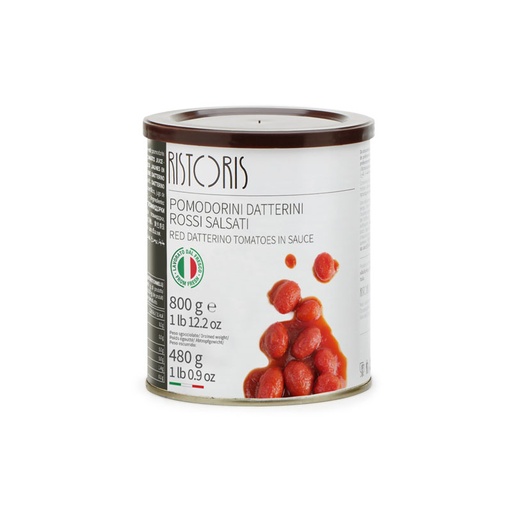
| Fast pasta sauce (15 min) | Datterino | Fresh or canned datterini | High sugar, melts quickly, sweet finish |
| Caprese / salad | Pachino IGP or Ciliegino | Fresh, raw | Crunch, aroma, sweetness, no cooking needed |
| Bruschetta | Pachino IGP | Fresh, diced | Firm flesh holds the cube, balanced flavour |
| Oven confit / garnish | Ciliegino or Datterino | Fresh, halved | Concentrates sugars, intense sweetness |
| Tomato preserve / passata | San Marzano DOP | Fresh to process | Few seeds, easy peel, classic preserve yield |
| Gourmet / marinara pizza | Datterino | Yellow or red datterini, halved | Sweet pop, modern presentation |
San Marzano DOP: the Agro Sarnese-Nocerino tomato
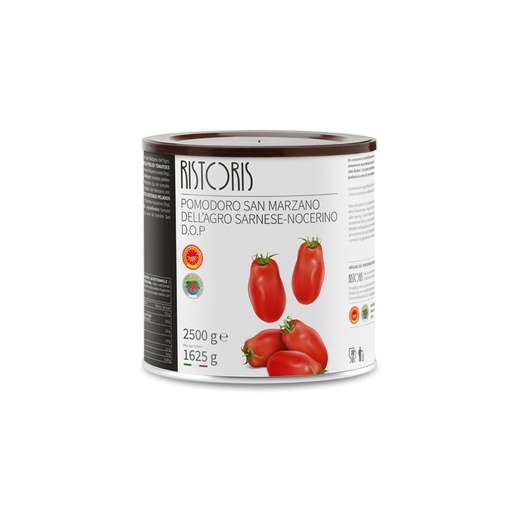
The Pomodoro San Marzano dell'Agro Sarnese-Nocerino DOP obtained European protected designation in 1996 (EC Reg. 1263/96). It is grown only in a defined area between the provinces of Naples, Salerno and Avellino, on the volcanic soils at the foot of Vesuvius, rich in phosphorus and potassium.
It is recognised by its elongated plum shape (6-8 cm), the pointed tip, the bright red colour and the thick, firm flesh with very few seeds. The skin peels off easily by hand: this is why it is the reference tomato for peeled tomatoes. The balance of 4.5-5 Brix sugars and medium-low acidity (pH 4.2-4.5) makes it sweet without being flat.
Beware of imitations: many cans labelled "San Marzano type" use other plum tomatoes grown outside the area. The true DOP carries the consortium number and the wording "San Marzano dell'Agro Sarnese-Nocerino DOP" with the EU PDO seal. The "Pomodorino del Piennolo del Vesuvio DOP" is a different, related product.
Datterino: the sweetest tomato
The datterino takes its name from its date-like shape: small, oval, elongated. Its strength is sweetness: 7-9 Brix, the highest of the four, with low acidity. Skin is thin, flesh firm.
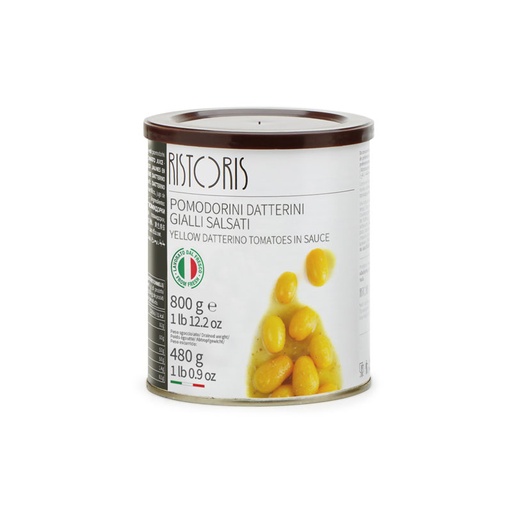
It is the ideal tomato when you want a sweet result fast. In a 15-minute pasta sauce it melts and releases sugar without long reduction. Raw it is candy-like; halved and oven-confit it concentrates to almost a dried fruit. The yellow datterino (giallo) is the gourmet variant: same sweetness, golden colour, lower visible acidity, popular on modern pizza and in fine-dining plating.
Pachino IGP: the Sicilian protected name
The Pomodoro di Pachino IGP (protected since 2003, EC Reg. 617/2003) is not a single variety but a designation that covers four types grown in south-eastern Sicily (provinces of Ragusa and Syracuse): ciliegino (cherry), tondo liscio (smooth round), costoluto (ribbed) and grappolo (on the vine).
The microclimate of Pachino, the salinity of the irrigation water and the intense sun give a balanced sweet-savoury flavour, intense aroma and crunchy flesh. It is mainly a table tomato: salad, bruschetta, raw. "Pachino" is therefore a geographic origin, not a botanical variety, exactly like "San Marzano" identifies an area and a designation.
Peeled vs passata vs fresh: which to use
The same tomato gives different results depending on the form. Three rules for the professional kitchen.
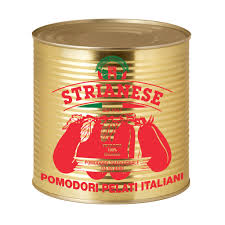
Peeled (pelati). Whole tomatoes (almost always San Marzano or plum) peeled and canned in their juice. Best for pizza and long sauces: you control the crushing and the texture stays rustic. Use hand-crushed, never blended, for Neapolitan pizza.
Passata. Tomatoes blended and sieved, smooth, no skin or seeds. Faster and uniform: good for quick sauces, soups, where a homogeneous texture is needed. Slightly less rustic than crushed peeled tomatoes.
Fresh. Maximum aroma but variable water content and seasonality. Best raw (salad, bruschetta) or for fast sauces with sweet datterini and ciliegini. For pizza and long sauces, quality canned product is more reliable and consistent all year round.
FAQ
What is the difference between Datterini and San Marzano?
San Marzano is an elongated plum tomato, low in sugar (4.5-5 Brix), firm flesh and few seeds: ideal for pizza and long sauces, peeled or passata. Datterino is small, oval and very sweet (7-9 Brix): ideal raw, in fast sauces and on gourmet pizza. One cooks, the other shines fresh.
Why is San Marzano the best tomato for pizza?
Because it has firm flesh, few seeds and little water, so it does not soak the dough. Its medium-low acidity and 4.5-5 Brix sweetness give a balanced sauce that holds the 60-90 seconds at 430-470 C of a wood-fired oven without turning bitter.
Is San Marzano DOP really better than a normal plum tomato?
For pizza and long sauce, yes: the DOP guarantees the Agro Sarnese-Nocerino origin, the volcanic soil and a controlled sweet-acid balance. Generic "San Marzano type" plum tomatoes can be good but lack the consistency and the protected designation.
Which tomato should I use for salad?
Datterino, Pachino IGP or Ciliegino: sweet, crunchy, aromatic and meant to be eaten raw. Avoid San Marzano raw: it is bred for cooking, with firm flesh and less sweetness, so it is flat in a salad.
What is the difference between Pachino and Ciliegino?
Pachino IGP is a protected Sicilian origin that includes four types, one of which is the ciliegino. Ciliegino is the small round cherry-tomato variety. So every Pachino ciliegino is a ciliegino, but not every ciliegino on the market is a Pachino IGP.
Peeled or passata for ragu?
Both work. Peeled San Marzano, hand-crushed, give a more rustic sauce with body. Passata gives a smoother, uniform result and cooks faster. For a long Sunday ragu, peeled tomatoes are the traditional choice.
Can I use datterini for pizza?
Yes, on gourmet or marinara pizza: halved fresh datterini add a sweet burst and modern look. For classic Neapolitan pizza with a uniform red base, hand-crushed San Marzano peeled tomatoes remain the standard.
How much do Italian tomatoes cost in Switzerland?
Indicative foodservice prices: San Marzano DOP peeled 3.50-6 CHF per 2.5 kg can; quality passata 2-3.50 CHF/kg; fresh datterini 6-10 CHF/kg; Pachino IGP and ciliegino on the vine 7-12 CHF/kg. Price varies by origin, designation and format.
LAPA: Italian tomatoes for pizzeria and kitchen
LAPA is the Italian food wholesaler in Switzerland for restaurants, pizzerias and professional kitchens. 3,000+ authentic products, refrigerated delivery 6 days a week, direct supply chain with selected Italian producers.
In the tomato range: San Marzano dell'Agro Sarnese-Nocerino DOP peeled tomatoes, plum peeled tomatoes for pizza, smooth Italian passata, red and yellow datterini fresh and in cans, Pachino IGP and ciliegino on the vine, semi-dried and oven-confit tomatoes.
Orders: lapa.ch/shop or +41 76 361 70 21. Free technical advice for chefs and pizza makers on choosing the right tomato for each dish.