It's 6 in the morning. Your bar's oven fires up, but something is missing. Your customers walk in, scan the counter with their eyes, and always ask for the same thing: a fragrant, golden cornetto that smells of butter and promise. If the cornetto isn't there – or isn't the right one – breakfast is already lost. We at LAPA know this, because every day we deliver this promise to hundreds of hospitality professionals across Switzerland.
""78% of customers choose their venue for breakfast based on the quality of the cornetti." – Is your bar ready?"
📍 From Vienna to Your Counter: A Story of Conquest
Origin: Born in Austria as the kipferl, perfected in France, crowned in Italy
Period: From the 13th century to today – over 700 years of evolution
Picture Vienna, 1683. A baker hears the Turks digging tunnels beneath the city walls and raises the alarm. To celebrate the victory, he creates a crescent-shaped pastry: the kipferl. Marie Antoinette brings it to Paris, where it becomes the croissant. But it is in Italy that the real magic happens: the dough becomes sweeter, softer, more generous. The cornetto is born – and breakfast will never be the same again. Today, that unmistakable aroma is exactly what your customers look for every morning.
🏛️ The Ritual That Brings Customers Back
Breakfast at the bar is not a meal. It's a ritual. Every morning, millions of people choose their venue based on a single criterion: the quality of the cornetto. Crisp outside, soft inside, with that glaze that gleams under the counter lights. Bars that serve outstanding cornetti create loyal customers. Those that cut corners on quality… watch their customers walk away. Which side do you want to be on?
Every cornetto you serve tells who you are. It says to your customers: "This is a serious place. Here you'll find the best." The right cornetto isn't a cost – it's your most powerful calling card, every single morning.
⚙️ The Art Behind Every Layer: What Makes a Cornetto Irresistible
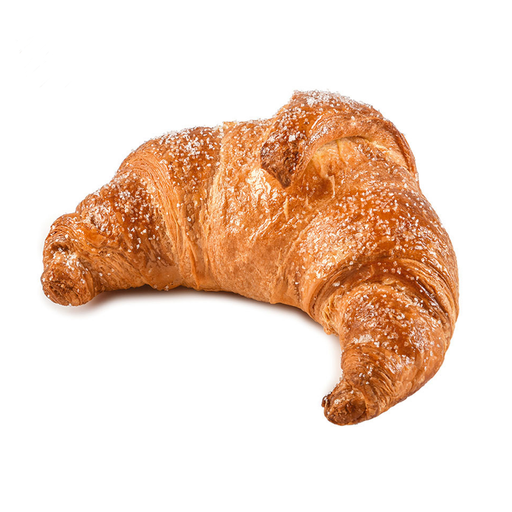
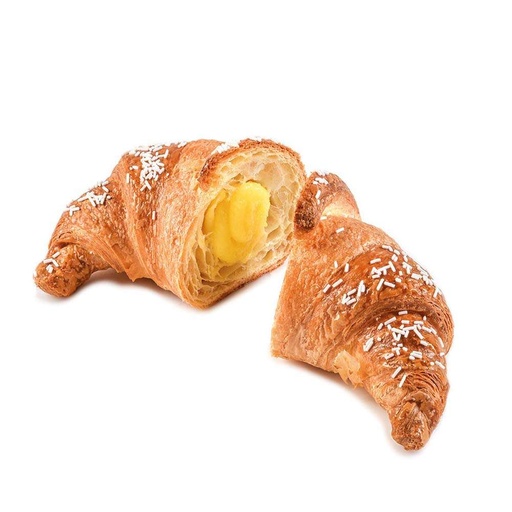
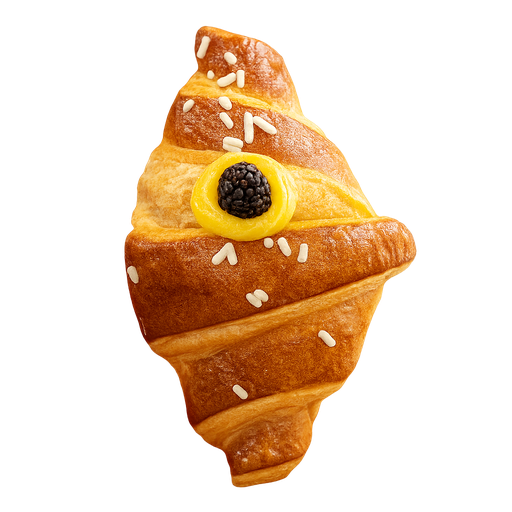
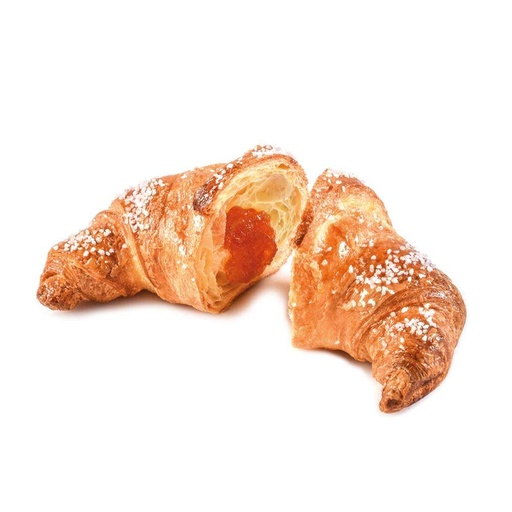
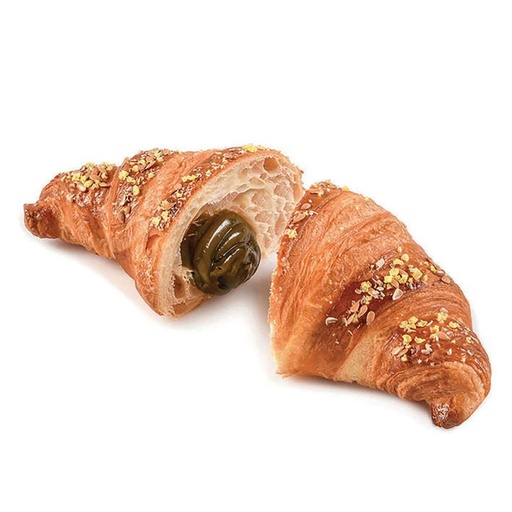
Cut a Cornetto 1980 in half. Look at the layers: thin as silk, one after another, separated by veils of butter that melt at the first bite. It's no accident. It's the technique of artisanal lamination: 72 layers of leavened dough, hours of resting, a slow fermentation that develops aromas impossible to replicate industrially. The glazed finish gives it that luminous crispness that catches the eye from the counter. And the empty shape? It gives you total freedom: pastry cream, jam, hazelnut spread – you fill it on the spot and your customer enjoys a unique experience every time.
Why the Cornetto 1980 Is Different:
- Artisanal dough, sweeter and more enveloping than the French croissant – designed for the Italian palate
- 72 lamination layers with butter and a slow 24-hour fermentation
- Empty shape: you fill it on the spot, creating endless variations for your customers
- Brilliant glaze that draws the eye from the counter and adds irresistible crispness
💡 Fun Facts You Can Share With Your Customers
- The crescent shape? Legend has it that it celebrates the victory over the Ottomans in Vienna in 1683. Viennese bakers created the kipferl in the shape of the Turkish crescent to "eat the enemy for breakfast." True or not, it's a perfect story to tell curious customers.
- Cornetto comes from "little horn," croissant means "crescent" like the moon. Two names, two cultures, a single obsession: the perfect breakfast.
- In the South they call it "brioche," in the North "cornetto." But beware: the true brioche has a richer dough, like sweet bread, without lamination. The authentic cornetto is laminated, layered, crisp. Your customers notice the difference.
- The glaze is the signature of the Italian cornetto: from a simple brush of egg to a real sugar glaze with pearl sugar. The Cornetto 1980 uses a glaze that gleams, crackles, and makes people say "I want another one."
🍽️ Pairings That Raise the Average Check
- Espresso – the classic pairing: quick, intense, perfect for the morning break
- Cappuccino – the complete breakfast customers love: cornetto + cappuccino = loyalty
- Apricot or cherry jam – a fresh filling that adds colour and value to the counter
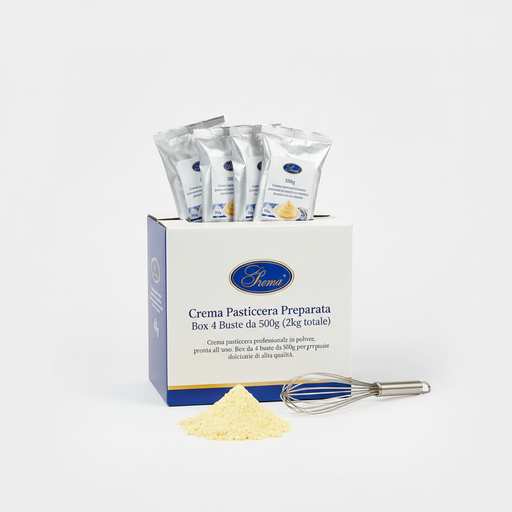
- Artisanal pastry cream – the most requested filling, the one that brings customers back every day
- Hazelnut spread or chocolate cream – the irresistible filling for families and weekend breakfasts
🛍️ Order Now: CORNETTO 1980 85G CURVO VUOTO GLASSATO – 50 Pieces
Delivery throughout Switzerland. Over 3,000 authentic Italian products. Call us: +41 76 361 70 21
Discover the LAPA Catalogue – Order Today