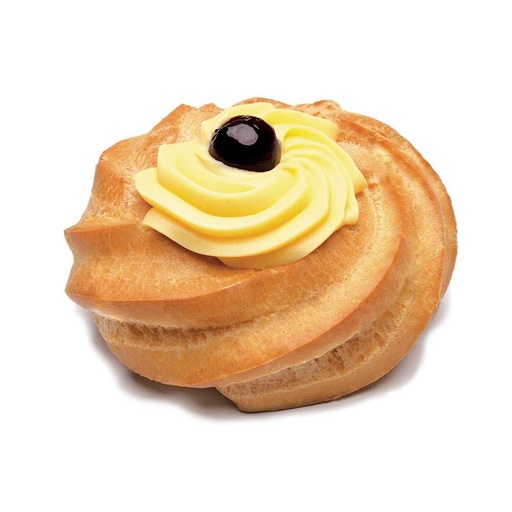
What if one dessert could transform your entire menu experience? The Baked Filled Zeppola delivers exactly that. While the fried version has dominated Italian pastry culture for centuries, the oven-baked evolution offers a decisive advantage for modern gastronomy: authentic Neapolitan flavor with significantly lighter texture. The result? A premium dessert your guests will remember — and come back for.
"«Non c'è San Giuseppe senza zeppole.» (Detto popolare napoletano)"
📍 From Naples to Your Kitchen: A Story of Craft
Region: Campania — the heartland of Italian pastry excellence
Heritage: Since the 18th century — perfected in Neapolitan monasteries and master workshops
The zeppola story begins in 18th-century Naples, where monastery kitchens created a simple fritter for the Feast of Saint Joseph on March 19th. Over generations, master pastry chefs transformed that modest fried dough into a masterpiece of flavor and texture. The baked version represents the definitive evolution: same generous filling, same authentic soul — but with a lightness and digestibility that today's discerning diners demand. For hospitality professionals who value quality and authenticity, it's the dessert that tells a story worth sharing.
🏛️ A Tradition That Drives Loyalty
Every March 19th, bakeries across Italy overflow with zeppole — a celebration of family, tradition, and shared joy that spans generations. The baked version fits seamlessly into this heritage while meeting modern expectations: lighter, equally delicious. For your establishment, this means a dessert that sparks conversation, creates memorable moments, and builds the kind of guest loyalty that drives repeat business.
The zeppola is more than a dessert — it's a symbol of celebration, family, and Italian joie de vivre. It embodies the remarkable ability of Italian pastry craft to evolve while preserving the essence of flavor. Light, indulgent, unforgettable.
⚙️ Craftsmanship in Every Detail
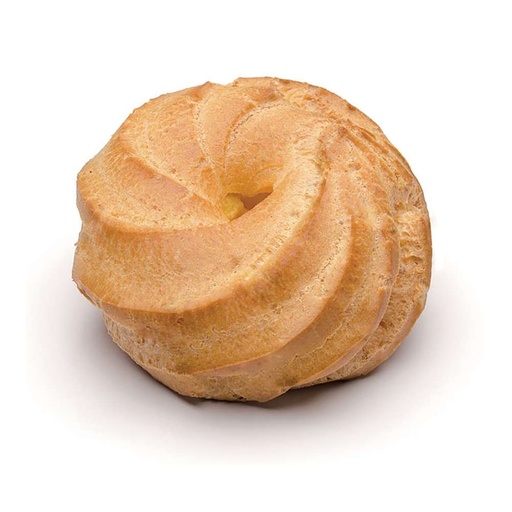
It starts with a soft leavened dough — fundamentally different from the choux pastry of the fried version. Premium ingredients: flour, eggs, sugar, butter, yeast, refined with vanilla or citrus zest. The slow fermentation delivers that signature airiness you feel from the first bite. Then precision baking to a perfect golden finish: crisp on the outside, cloud-soft within. The filling — velvety pastry cream, sweetened ricotta, or fruit preserves — is applied cold to lock in freshness and texture. The result: a harmonious contrast that closes your eyes with pleasure.
Why Your Guests Will Love It:
- Superior lightness and digestibility compared to fried versions — the intense flavor stays, the heaviness disappears.
- Golden, delicately crisp surface gives way to an extraordinarily soft, airy interior — every bite is a textural revelation.
- Three fillings, endless possibilities: pastry cream, sweet ricotta, fruit preserves. One product that adapts to every occasion and every palate.
💡 Stories Worth Sharing
- The name 'zeppola' may derive from the Latin 'cippus' (piece of wood) or 'serpula' (small snake), referencing its spiral shape. An ancient name for a timeless pleasure.
- For the Feast of Saint Joseph, communities traditionally lit bonfires — a spring fertility ritual that filled the air alongside the aroma of freshly baked zeppole.
- From Sicilian 'sfingi' to Calabrian 'crispelli' to Apulian 'zeppole': every Italian region has its own variation, all united by the round shape and festive spirit.
🍽️ Perfect Pairings
- A bold Italian espresso — the bitter roast notes elevate the velvety sweetness of the cream.
- A Passito di Pantelleria, Moscato d'Asti, or Vin Santo — aromatic freshness balances the sweetness for a memorable finish.
- An ice-cold Limoncello or artisanal Nocino — the perfect vibrant close to any meal.
🛍️ ZEPPOLA AL FORNO RIPIENA 120G — 12 Pieces per Case
Available now in the LAPA catalog — over 3,000 authentic Italian products for your professional kitchen. Call us: +41 76 361 70 21
Explore the LAPA Catalog — Order Now