Last updated: 28 May 2026
In 30 seconds: what is the Pasticciotto Leccese?
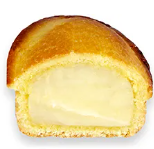
The Pasticciotto Leccese is a small oval baked pastry from Lecce, in the Salento area of Puglia: a shell of shortcrust pastry made with lard filled with vanilla pastry cream, baked at 180-200 C until golden. The classic single piece weighs 80-120 g, measures about 9 x 6 cm and is eaten warm, ideally at breakfast in a bar.
It was born in 1745 in Galatina (province of Lecce) at the Ascalone pastry shop. Today it has three main versions: classic (pastry cream), fruttone (almond paste and quince or grape jam) and chocolate (cocoa cream or cream plus black-cherry jam). Below you will find a comparison table, the traditional recipe, the variants, storage and serving rules, an FAQ and where to buy it in Switzerland.
Comparison table: classic, chocolate and fruttone pasticciotto
| Feature | Classic pasticciotto | Chocolate pasticciotto | Fruttone |
|---|---|---|---|
| Shell | Lard shortcrust | Cocoa shortcrust | Almond paste plus shortcrust |
| Filling | Vanilla pastry cream | Chocolate cream or cream plus black cherry | Quince or grape jam (cotognata) |
| Weight per piece | 80-120 g | 90-130 g | 90-130 g |
| Size | 9 x 6 cm | 9 x 6 cm | 9 x 6 cm |
| Calories | 360-400 kcal / 100 g | 380-420 kcal / 100 g | 370-410 kcal / 100 g |
| Baking | 180-200 C for 18-22 min | 180-200 C for 18-22 min | 180 C for 20-25 min |
| Service | Warm, just baked | Warm or at room temperature | At room temperature |
| Origin | Galatina, 1745 | 20th century variant | Salento tradition |
Origin: Galatina 1745 and the Ascalone pastry shop
The pasticciotto was born in 1745 in Galatina, in the province of Lecce, at the historic Ascalone pastry shop. Tradition credits pastry chef Andrea Ascalone with the invention: to avoid wasting leftover shortcrust and pastry cream, he assembled small individual pastries shaped like a kidney bean.
The name comes from pasticcio (a baked, filled preparation) plus the diminutive -otto: literally "little pie". From Galatina it spread across the whole of Salento and then Puglia, becoming the symbol of the southern Italian bar breakfast, eaten warm together with an espresso or an almond-milk coffee.
The Salento pasticciotto is today recognised as a Traditional Agri-food Product (PAT) of the Puglia region. The dialect rule is simple: it must be eaten cavuru cavuru, meaning very warm, when the pastry is crumbly and the cream is still soft inside.
Traditional recipe: lard shortcrust and pastry cream
The authentic pasticciotto rests on two pillars: a shortcrust pastry made with lard (not butter) and a dense vanilla pastry cream. Lard gives the typical crumbly, sandy texture and the long shelf-stability that butter cannot match.
Professional proportions for the shortcrust (about 20 pieces): 1000 g soft wheat flour 00, 400 g lard, 400 g sugar, 4 whole eggs plus 2 yolks, zest of 1 lemon, a pinch of baking powder. The dough must rest in the fridge at +4 C for at least 2 hours.
For the pastry cream: 1000 ml whole milk, 8 egg yolks, 250 g sugar, 90 g soft wheat flour or cornstarch, 1 vanilla pod, zest of 1 lemon. Cook to 82-85 C, cool quickly, then pipe cold into the lined moulds.
Assembly: line the oval moulds with shortcrust, fill with cold cream leaving 5 mm at the edge, close with a second disc of pastry, brush with beaten egg yolk. Bake at 180-200 C for 18-22 minutes until a deep golden colour appears.
Variants: chocolate, fruttone, pistachio
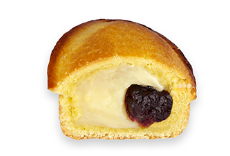
The chocolate pasticciotto uses a cocoa shortcrust and a filling of chocolate cream, or of pastry cream with a heart of black-cherry jam (the so-called "all'amarena"). It is the most popular modern variant in city bars.
The fruttone is the fruit cousin: a base of shortcrust, a layer of almond paste and a filling of quince jam (cotognata) or grape jam, finished with a dark chocolate coating. It keeps longer than the classic and is served at room temperature.
Among the newer versions: pistachio pasticciotto (Bronte pistachio cream), ricotta and pear, salted caramel. Purists from Galatina defend the classic recipe, but the variants now drive much of bar sales across Italy and abroad.
Storage, freezing and service for foodservice
Fresh shelf life (+4 C): 2-3 days in a closed display, because the pastry cream is a fresh product. Frozen baked (-18 C): up to 3 months; frozen raw: up to 2 months, then baked directly from frozen adding 4-5 minutes.
Regeneration: warm 3-4 minutes at 150 C to recover the crumbly shell and the warm cream; never use the microwave (it makes the pastry rubbery). Service: warm at breakfast, dusted lightly with icing sugar, alongside espresso.
Swiss food cost: 0.80-1.50 CHF per piece in-house, or 1.20-2.20 CHF buying ready frozen. Swiss bar selling price: 3.50-5.50 CHF per piece. Wholesale price for foodservice: 18-28 CHF/kg depending on format and variant.
FAQ on the Pasticciotto Leccese
What is the pasticciotto leccese?
It is a small oval baked pastry from Lecce (Salento, Puglia): a shell of lard shortcrust filled with vanilla pastry cream, baked until golden and eaten warm. The classic piece weighs 80-120 g. It was born in Galatina in 1745.
Why is lard used and not butter?
Lard gives the shortcrust its typical crumbly, sandy texture and a longer shelf stability. Butter makes the pastry softer and shorter-lived. The authentic Galatina recipe uses only lard; butter versions are a modern adaptation.
What is the difference between pasticciotto and fruttone?
The classic pasticciotto is filled with vanilla pastry cream. The fruttone has a layer of almond paste and a filling of quince or grape jam, coated in dark chocolate. The fruttone keeps longer and is served cold, the pasticciotto warm.
How is the pasticciotto eaten?
Warm, just baked (in dialect cavuru cavuru), at breakfast with an espresso or an almond-milk coffee. The warm pastry is crumbly and the cream stays soft inside. It is the classic bar breakfast of Salento.
Can the pasticciotto be frozen?
Yes: baked it keeps up to 3 months at -18 C, raw up to 2 months. Bake raw pieces directly from frozen adding 4-5 minutes. Regenerate baked pieces for 3-4 minutes at 150 C, never in the microwave.
How long does a fresh pasticciotto last?
2-3 days in a refrigerated display at +4 C, because the pastry cream is a fresh product. For best quality it should be sold within 24 hours and served warm the same day it is baked.
How much does a pasticciotto cost in a Swiss bar?
Average selling price 3.50-5.50 CHF per piece. The food cost is 0.80-1.50 CHF made in-house, or 1.20-2.20 CHF buying it ready frozen. Wholesale price for foodservice is 18-28 CHF/kg.
Where to buy pasticciotti in Switzerland?
LAPA distributes artisan frozen pasticciotti leccesi (classic, chocolate, fruttone) throughout Switzerland in 24-48 hours, plus all the ingredients to make them in-house: lard, 00 flour, pastry cream, vanilla and Bronte pistachio paste.
LAPA: ingredients for the pasticciotto in Switzerland
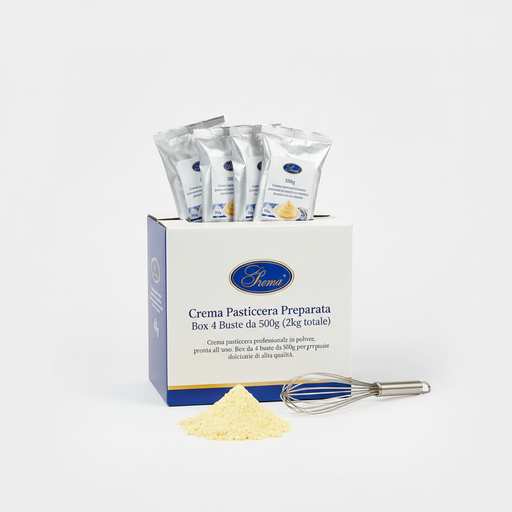
LAPA supplies artisan frozen pasticciotti leccesi, in classic, chocolate and fruttone versions, ready to regenerate for bars, hotels and catering throughout Switzerland (Ticino, Romandie, German-speaking Switzerland). We also distribute all the ingredients for in-house production: lard, soft wheat flour 00, professional pastry cream, vanilla pods, candied fruit, Bronte pistachio paste and black-cherry jam.
Delivery within 24-48 hours across Switzerland, B2B orders on www.lapa.ch or by phone: +41 76 361 70 21.