Parmigiano Reggiano vs Grana Padano: The Definitive Guide for Professional Kitchens
Are you serving your guests the right cheese? Parmigiano Reggiano and Grana Padano rank among the world's most celebrated cheeses. Both hail from Northern Italy, both carry the DOP label (Denominazione di Origine Protetta), and both are crafted from raw cow's milk. Yet the differences between them are profound — from how the cows are fed to the additives permitted, from minimum aging to flavour complexity. For professional chefs and restaurateurs, understanding these distinctions is a competitive advantage: they shape flavour, texture, and every dish that leaves your kitchen.
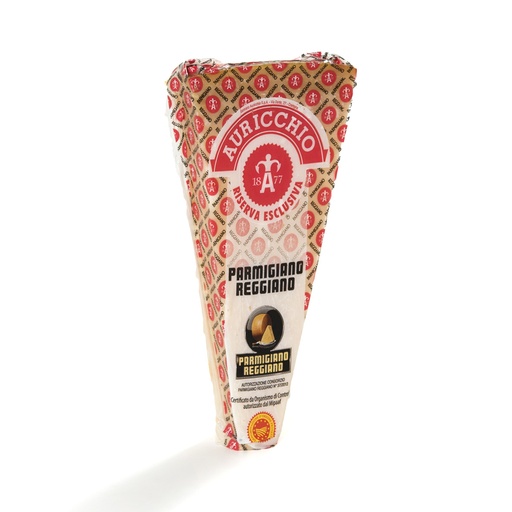
LAPA, your specialist for premium Italian food products in Switzerland, sources Parmigiano Reggiano in multiple aging stages directly from the finest dairies of Emilia-Romagna. In this article, we reveal the key differences between these two hard cheese icons so you can make the perfect choice for your kitchen.
Two cheeses, one heritage — but differences that change everything
At first glance, Parmigiano Reggiano and Grana Padano look almost identical: large, golden wheels with a granular structure and a savoury aroma that fills the room the moment you break the crust. Both belong to the grana cheese family — the granular Italian hard cheeses. Their shared history stretches back to the Middle Ages, when Cistercian monks in the Po Valley began transforming vast quantities of milk into long-lasting cheese.
Behind the outward similarity, however, lie significant differences. The production regulations for Parmigiano Reggiano are considerably stricter than those for Grana Padano — covering the origin of the milk, the feeding of the cows, the permitted additives, and the minimum aging period. Any restaurateur or chef who takes the quality of their dishes seriously needs to understand these distinctions. LAPA supports you with expert knowledge and a carefully curated selection of both cheeses.
Production areas: Where do these masterpieces come from?
A fundamental difference lies in the production area itself. The DOP regulations precisely define where each cheese may be manufactured — and the contrast is striking.
Parmigiano Reggiano: Only 5 provinces — concentrated excellence
Parmigiano Reggiano may only be produced in the provinces of Parma, Reggio Emilia, Modena, Bologna (left of the Reno river), and Mantua (right of the Po river). This tightly defined area ensures exceptional control density and consistent quality. The entire production chain — from milk production through cheesemaking to aging — must take place within this zone. Every wheel tells the story of this land.
Grana Padano: 33 provinces across 5 regions
Grana Padano has a considerably larger production area: 33 provinces across Lombardy, Veneto, Piedmont, Emilia-Romagna, and Trentino-South Tyrol. This broader geography explains the higher production volume. In 2019, approximately 5.16 million wheels of Grana Padano were produced, compared with 3.75 million wheels of Parmigiano Reggiano. Both figures are impressive, but the difference illustrates two fundamentally different production philosophies.
Production: The differences that define quality
The production of both cheeses follows the same basic principle: raw cow's milk is processed with natural rennet and whey starter culture. Approximately 14 to 15 litres of milk are needed for just one kilogramme of finished cheese. But it is in the details that quality is won or lost — and this is where the two cheeses part ways.
Cow feeding: Hay vs silage
This is one of the most fundamental differences. For Parmigiano Reggiano, cows may only be fed hay and fresh grass. Silage — fermented green fodder — is strictly prohibited. This regulation has a direct impact on milk quality and therefore on the flavour of the finished cheese. Hay-fed milk produces a more complex, layered aroma profile. Your guests will taste the difference.
For Grana Padano, silage is permitted. The cows may receive maize silage and other fermented feeds. This lowers feeding costs and enables higher production volumes, but inevitably influences the flavour profile. LAPA pays close attention to these subtle quality differences when selecting its suppliers.
Additives: Lysozyme — yes or no?
This is perhaps the most critical distinction for quality-conscious restaurateurs. Parmigiano Reggiano is produced entirely without additives — only milk, salt, rennet, and natural whey starter culture. No preservatives. No processing aids. Nothing. Pure, clean, perfection.
For Grana Padano, however, the use of lysozyme is permitted. Lysozyme is an enzyme derived from hen egg white that serves as a natural preservative. It prevents late blowing — an undesirable fermentation caused by Clostridium bacteria. These bacteria can enter the milk through silage, and here the circle closes: because Grana Padano permits silage feeding, it requires lysozyme as a protective measure. Parmigiano Reggiano eliminates the problem at the source through its silage ban.
For guests with hen egg allergy, this is essential information: Parmigiano Reggiano is free of egg components; Grana Padano is not necessarily. At LAPA, you will always receive expert guidance on allergen considerations.
Production rhythm
Parmigiano Reggiano is produced once per day. The evening milk rests overnight, is partially skimmed, and the following morning is blended with fresh morning milk. This unhurried rhythm reflects centuries of artisanal tradition. For Grana Padano, up to two productions per day are possible, which explains the higher overall output.
Aging and flavour: Where the magic happens
Aging is crucial for both cheeses in developing flavour, texture, and those unmistakable amino acid crystals that crunch delicately under the teeth.
Minimum aging: 12 vs 9 months
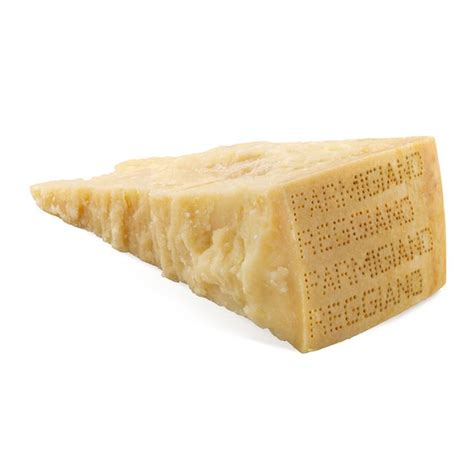
Parmigiano Reggiano must age for a minimum of 12 months before sale. In practice, most wheels mature significantly longer: 24 months is the standard, and top qualities reach 36 or even 48 months. Extended aging breaks down proteins, creates the signature tyrosine crystals, and intensifies the flavour into something truly unforgettable.
Grana Padano has a minimum aging period of just 9 months, with an average of approximately 15 months. Longer-aged variants exist (Riserva at 20+ months), but the majority of production is sold younger than Parmigiano Reggiano.
Flavour profiles compared
Parmigiano Reggiano captivates with an intense, multi-layered flavour: nutty, savoury, slightly fruity — and with extended aging, also piquant and complex. The longer maturation creates a more granular, crumbly texture with clearly perceptible crystals. A 36-month Parmigiano is a sensory experience in its own right.
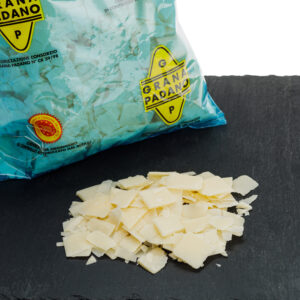
Grana Padano is by comparison milder, more buttery, and less complex. It offers a softer texture and a gentler aroma profile. This does not make it inferior — it makes it more versatile, ideal where the cheese should complement rather than dominate other ingredients. LAPA recommends both cheeses, depending on the intended use and dish.
Price and quality: What is really worth it?
Parmigiano Reggiano commands a higher price than Grana Padano. This reflects stricter production regulations, costlier hay feeding, zero additives, and longer aging. For restaurateurs, the key question is: does the premium deliver value?
The answer depends on the application. Where the cheese plays the starring role — as a table cheese, on a cheese board, broken over a carpaccio, or as the crowning touch on a risotto — Parmigiano Reggiano is almost always worth the premium. Its complex aroma and characteristic texture make all the difference your guests will remember.
Where larger quantities are needed and the cheese plays a supporting role — grated into a filling or blended into a pesto — Grana Padano can be an economically smart alternative. The key is always using high-quality cheese. LAPA offers you both options in professional grade quality.
| Criterion | Parmigiano Reggiano | Grana Padano |
|---|---|---|
| Production area | 5 provinces | 33 provinces |
| Cow feed | Hay and grass only | Silage also permitted |
| Additives | None | Lysozyme permitted |
| Minimum aging | 12 months | 9 months |
| Average aging | 24+ months | 15 months |
| Flavour | Intense, nutty, crystals | Milder, buttery |
| Price | Higher | More affordable |
Which cheese for which dish?
The choice between Parmigiano Reggiano and Grana Padano depends heavily on the dish. Here are practical recommendations that LAPA shares daily with its restaurant clients across Switzerland.
- Cheese board and aperitif: Parmigiano Reggiano (24-36 months), broken into chunks with Aceto Balsamico Tradizionale — close your eyes and let the aroma transport you
- Risotto: Parmigiano Reggiano (24 months) for the mantecatura delivers maximum creaminess and depth of flavour your guests will remember
- Pasta al pomodoro: both work beautifully — Parmigiano for bolder character, Grana for a gentler balance
- Pesto alla genovese: Grana Padano is traditionally preferred in Liguria for its milder profile
- Caesar Salad: Parmigiano Reggiano with its crystals gives the salad unmistakable character
- Fillings and gratins: Grana Padano is the smart choice when larger quantities are needed
- Carpaccio finishing: Parmigiano Reggiano (30-36 months) in paper-thin shavings — pure elegance on the plate
The cycle of Parmigiano Reggiano deserves special mention: the whey remaining from cheese production feeds the pigs destined for Prosciutto di Parma. This creates a unique, sustainable loop between two DOP products of the same region. LAPA naturally carries both specialities.
LAPA: Parmigiano Reggiano in multiple aging stages for your kitchen
As your specialist for premium Italian products in Switzerland, LAPA offers Parmigiano Reggiano in multiple aging stages: 24 months for versatile kitchen use, 30 months for a more intense and decisive profile, and 36 months for connoisseurs seeking the pinnacle of flavour and crystal structure. Every wheel is personally selected.
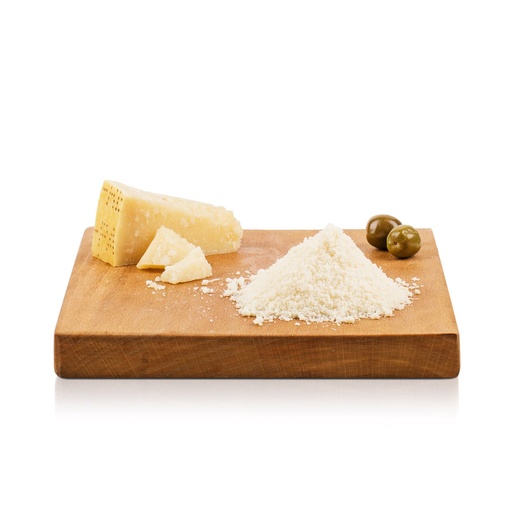
Our LAPA team is ready to advise you on which aging stage best suits your concept. Whether broken chunks for the cheese board, grated for the kitchen, or whole and half wheels — we deliver the same day in German-speaking Switzerland for orders by 05:00 (rest of Switzerland: 1-3 working days with refrigerated partner carrier). Call us: +41 76 361 70 21.
We carry Parmigiano Reggiano in multiple aging stages (24, 30, 36 months) — ask about our current offer. Picture the moment you open your next delivery and that unmistakable aroma of perfectly aged Parmigiano fills your kitchen. LAPA is your trusted partner for authentic Italian cheese specialities in Switzerland.