
Panna Cotta Piemontese: Original Recipe and Secrets of the Tradition
Picture this: a spoon glides through a snow-white cream that trembles at the slightest touch. It melts on the tongue, releasing the pure fragrance of vanilla and the velvety richness of fresh cream. This is Panna Cotta Piemontese — the dessert that conquered the world with just four ingredients and centuries of tradition. Born in the hills of the Langhe, this preparation of fresh cream, sugar, gelatin and vanilla embodies the essence of Piedmontese pastry-making: the fewest possible ingredients, the highest possible quality, the most extraordinary result.
For hospitality professionals across Switzerland, serving an authentic Panna Cotta Piemontese means offering your guests an unforgettable experience — one that starts with exceptional raw materials. LAPA, your trusted partner with over 3,000 authentic Italian products and delivery throughout Switzerland (same day in German-speaking Switzerland for orders by 05:00), provides premium fresh cream, natural vanilla and hand-selected berries to bring this Piedmontese classic to your table.
Origins and History of Panna Cotta in the Langhe
The origins of panna cotta run deep in the Piedmontese countryside, particularly in the Langhe and Monferrato hills. While the earliest written records date to the 1960s, oral tradition has carried this recipe across many generations. Piedmontese farmwives crafted this dessert with freshly milked cream, sugar and gelatin — creating something deceptively simple yet extraordinarily refined.
Panna cotta began as a rustic farmstead dessert. It was in the trattorias of the Langhe that it was perfected and began crossing regional borders. By the 1980s and 1990s, it had conquered the menus of Michelin-starred Italian restaurants — and then the world.
In essence, panna cotta is the purest expression of the Piedmontese culinary philosophy: simple, genuine ingredients, treated with respect, to achieve a result that transcends the sum of its parts.
Original Ingredients for Panna Cotta Piemontese
The beauty of panna cotta lies in its radical simplicity: very few ingredients are required, but each one must be impeccable. Fresh cream is the undisputed star — and the final result stands or falls on its quality.
Base Ingredients and Toppings
- 500 ml premium fresh cream (minimum 35% fat content)
- 100 ml fresh whole milk
- 80 g caster sugar
- 1 natural vanilla pod (or 1 teaspoon pure extract)
- 4 g gelatin sheets (approximately 2 sheets)
- For the caramel sauce: 150 g sugar, 50 ml water, 30 ml hot fresh cream
- For the coulis: 250 g mixed berries, 60 g sugar, lemon juice
The decisive factor is the cream: it must have a fat content of at least 35% to deliver the creaminess and body your guests expect. LAPA supplies premium Italian fresh cream alongside natural vanilla and hand-selected berries — everything you need for a panna cotta that speaks for itself.
The Secret of Gelatin: Dosage and the Perfect Tremble
Gelatin dosage is the single element that separates a forgettable panna cotta from an extraordinary one. Too much produces a rubbery texture; too little and it collapses on the plate. The secret of the great Piedmontese pastry chefs? Finding the precise balance.
Rules for Perfect Dosage
- For panna cotta served in a glass: 3–4 g gelatin per 600 ml total liquid.
- For panna cotta to be unmoulded: 5–6 g gelatin per 600 ml total liquid.
- Gelatin sheets must always be soaked in cold water for at least 10 minutes.
- Never exceed 6 g per 600 ml — otherwise the result will be rubbery.
- Gelatin is dissolved in hot but never boiling cream, to preserve its gelling power.
Authentic Panna Cotta Piemontese must tremble — a gentle wobble when the plate is nudged, neither rigid like a pudding nor so soft it loses its shape. This signature texture is achieved only through precise gelatin dosage and excellent fresh cream like that supplied by LAPA. Temperature is equally critical: the panna cotta must cool gradually, first 30 minutes at room temperature, then at least 4 hours in the refrigerator.
Step-by-Step Preparation of Panna Cotta
Preparing Panna Cotta Piemontese is straightforward — but it rewards precision. Every degree and every minute matters.
Preparing the Base
- Place the gelatin sheets in cold water for at least 10 minutes until fully softened.
- Pour the fresh cream and milk into a heavy-bottomed saucepan.
- Split the vanilla pod, scrape out the seeds and add them to the cream along with the sugar.
- Heat over medium heat, stirring constantly, until the mixture reaches 80–85°C. Do not let it boil.
- Remove from heat, discard the vanilla pod and stir in the squeezed gelatin.
- Stir until completely dissolved, then strain through a fine sieve.
- Pour into moulds, cool 30 minutes at room temperature, then refrigerate for 4–6 hours.
Common Mistakes to Avoid
- Boiling the cream: destroys delicate flavour and compromises gelatin texture.
- Using too much gelatin: the result will be rubbery instead of beautifully trembling.
- Skipping the straining step: even small lumps will ruin the velvety finish.
- Cooling too rapidly: can cause the gelatin to set unevenly.
Toppings and Professional Plating
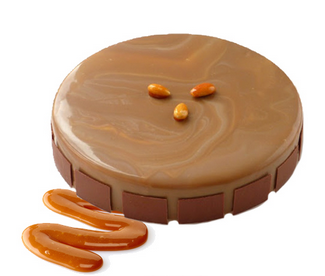
The right topping transforms panna cotta from a simple dessert into a culinary work of art. The two classic garnishes of Piedmontese tradition are caramel and berries — both available in the LAPA catalogue with hand-selected ingredients.
Caramel and Berry Coulis
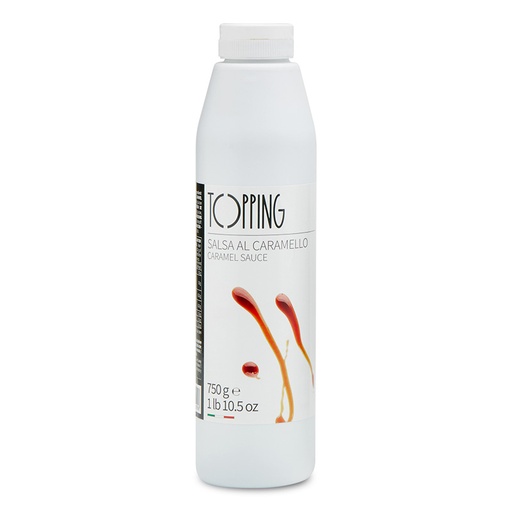
For the caramel, melt sugar with water without stirring until deep amber, then slowly add hot fresh LAPA cream and a pinch of salt. For the coulis, cook LAPA berries with sugar and lemon juice for 5–7 minutes, blend and pass through a sieve. Cool both sauces before serving.
Professional Plating Tips
To unmould, dip the form in hot water for 5 seconds and invert onto the plate. Serve on white plates, garnish with fresh berries, delicate mint leaves and a drizzle of coulis. The ideal serving temperature is 4–8°C. A quenelle of whipped cream or a caramel tuile provides the finishing touch.
Why the Best Chefs in Switzerland Choose LAPA
Panna Cotta Piemontese proves a fundamental truth: simplicity demands perfection. With only four base components, there is nowhere to hide. For hospitality and pastry professionals across Switzerland, LAPA is the partner that makes perfection possible.
LAPA's Italian fresh cream delivers the exact fat content for a perfectly creamy panna cotta. Natural LAPA vanilla pods release an unmistakable fragrance. LAPA berries, fresh and premium-selected, complete the dessert with vibrant colour and flavour. With over 3,000 authentic Italian products and delivery across Switzerland (same day in German-speaking Switzerland for orders by 05:00), LAPA guarantees absolute freshness on every order.
LAPA works exclusively with carefully selected Italian producers, guaranteeing authenticity and full traceability. Whether you run a Michelin-starred restaurant, an artisanal pastry shop, a boutique hotel or a catering service — LAPA is your single source for premium Italian ingredients in Switzerland.
Frequently Asked Questions about Panna Cotta Piemontese
How much gelatin is needed for a perfect panna cotta?
The ideal dosage is 4 g of gelatin sheets per 600 ml of total liquid when served in a glass, or 5–6 g if it needs to be unmoulded. Too much makes it rubbery; too little makes it collapse.
Can you make panna cotta without gelatin?
Yes, plant-based alternatives like agar agar exist, but the result differs significantly. Agar agar produces a more rigid, less creamy consistency. For an authentic Piedmontese panna cotta with that signature tremble, gelatin sheets remain the gold standard.
How long should panna cotta stay in the refrigerator?
A minimum of 4 hours, but the best results come from overnight resting — at least 8–10 hours. The extended time allows the gelatin to stabilise completely for a flawless texture.
Why does my panna cotta have a rubbery texture?
The most common cause is excess gelatin. Follow the rule: 4 g per 600 ml of liquid. Other culprits include boiling the cream with the gelatin or using cream with insufficient fat content.
What is the difference between panna cotta and pudding?
Panna cotta is set with gelatin and requires no baking, while pudding relies on eggs and starch. Panna cotta has a distinctly lighter, trembling consistency. Authentic Panna Cotta Piemontese contains no eggs whatsoever.
What are the best toppings for panna cotta?
The classic Piedmontese garnishes are caramel and berries. Caramel creates a sophisticated flavour contrast with its slightly bitter note, while berries bring freshness and acidity. LAPA offers premium selected berries and every ingredient you need for professional sauces and coulis.
Discover the full range of professional pastry ingredients in the LAPA catalogue: fresh cream, natural vanilla, berries and over 3,000 authentic Italian products. Delivery across Switzerland, same day in German-speaking Switzerland for orders by 05:00. Call +41 76 361 70 21 or order at lapa.ch
Products for Panna Cotta

Products mentioned in this article
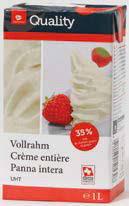
- Whole cream 35% fat — The exact richness the original panna cotta recipe requires.
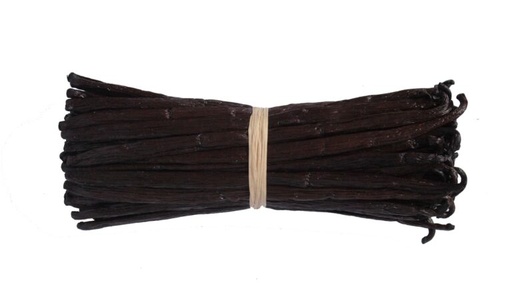
- Bourbon vanilla pods — Whole pods for the pure fragrance the classic recipe calls for.
- Leaf gelatin — Gives panna cotta the clean, trembling set the recipe is known for.
- Frozen mixed berries — For the traditional fresh-fruit garnish served alongside the classic dessert.
- Sweetened berry purée — Ready-made coulis to plate panna cotta without any extra prep time.