Fine Tomato Pulp Ristoris: the Red Base for Professional Kitchens
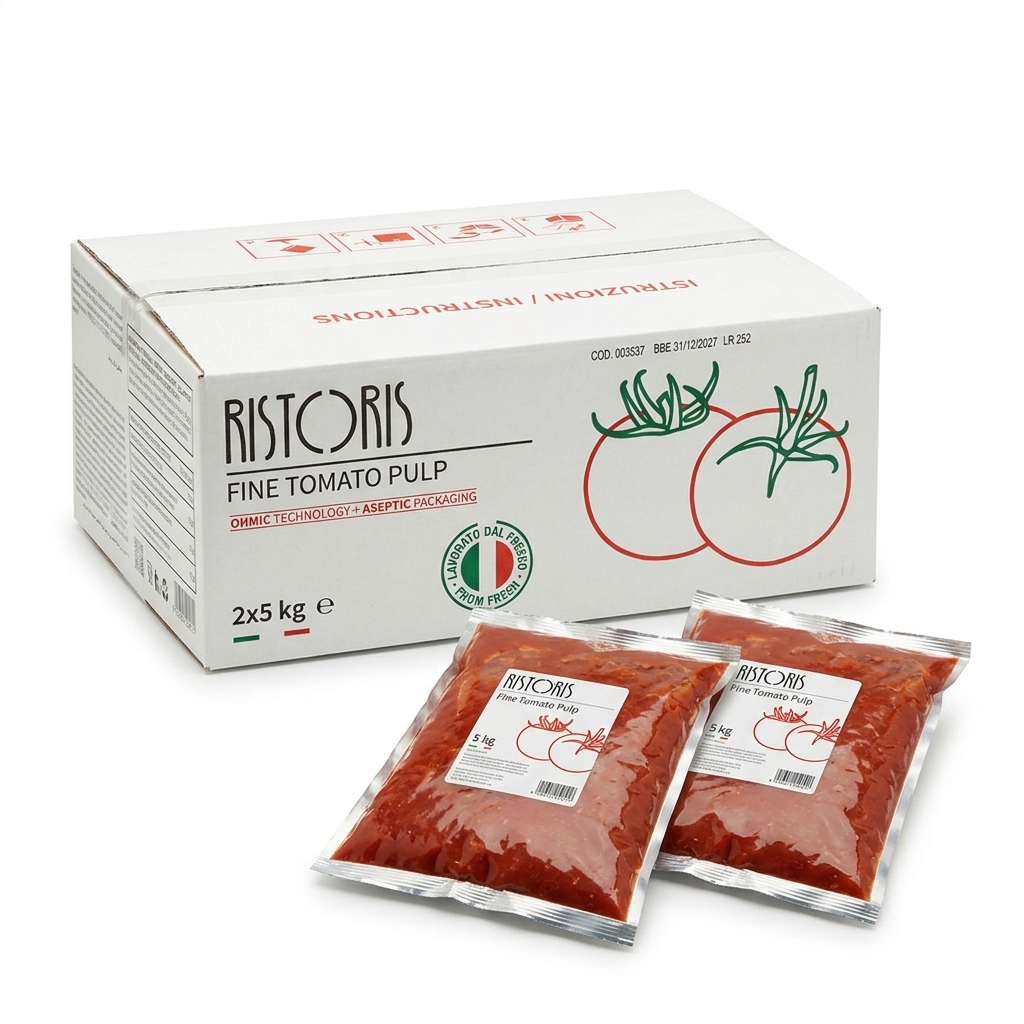
Ristoris Fine Tomato Pulp is a 100% tomato pulp in an aseptic bag-in-box of 2 bags of 5 kg (10 kg per carton), ready to use, with no added salt and no preservatives. With 6-8 °Brix, pH max 4.50 and a 30-month ambient shelf life, it is designed for pizzerias, restaurants and canteens that work high volumes and need a consistent red base, delivered in Switzerland by LAPA.
What Is Fine Tomato Pulp
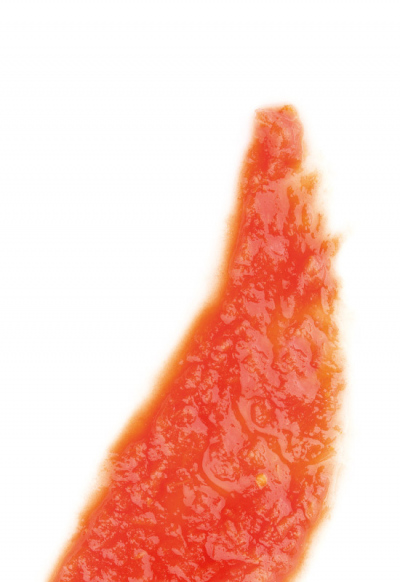
Fine tomato pulp sits between passata and chopped tomatoes: the tomatoes are crushed into very small, uniform pieces that keep the fibre and freshness of the fruit while spreading evenly like a sauce. The Ristoris technical sheet specifies skins at a maximum of 12.5 cm² per 100 g, total acidity below 8.5% on dry weight and sugars of at least 42% on dry weight: numbers that translate into a clean, sweet and naturally dense tomato taste, without the metallic note typical of tinned products.
Ristoris: Food Service Conserves from Broni, Lombardy
Ristoris Srl is based in Broni, in the province of Pavia (Lombardy, Italy), and specialises in preserved foods for the food service channel, with more than 20 product lines ranging from olives and vegetables to tomatoes and sauces. Raw materials are carefully selected, giving preference to Italian origin, and processing takes place in facilities certified to the international ISO, BRC and IFS standards. The tomato used in this fine pulp is of Italian origin.
Aseptic Bag-in-Box: the Advantages over the Tin
Each carton contains 2 aseptic bags of 5 kg (35 x 30 x 5 cm each) packed in a compact 36 x 29 x 15 cm box of just 10.4 kg gross. The aseptic filling preserves the product for 30 months from the production date without refrigeration and without preservatives. Compared with traditional 3-5 kg tins, the bag-in-box takes less shelf space, opens without tools or cut risks, empties almost completely reducing waste, and leaves a flat, light packaging instead of bulky metal to dispose of. A full EPAL pallet holds 80 cartons (8 per layer, 10 layers), equal to 800 kg of product.
Professional Uses: Pizza, Sauces, Oven Dishes
For pizza, season the pulp raw with salt, oregano or fresh basil and a drizzle of extra virgin olive oil: 80-100 g are enough for a 33 cm round pizza, while a 60 x 40 cm tray pizza takes 250-300 g. The AVPN standard for Neapolitan pizza requires raw tomato baked at 430-485 °C for 60-90 seconds, where a fine pulp keeps the disc moist without making the base wet. The classic Margherita pairs the tomato with fior di latte, basil and extra virgin olive oil; the Marinara only needs garlic, oregano and oil. In the kitchen, one 5 kg bag yields about 50 portions of express pasta sauce, and the pulp is the working base for parmigiana, lasagne, meatballs in sauce and slow-simmered ragù.
Common Mistakes to Avoid
Do not cook the tomato before topping a Neapolitan-style pizza: the pulp must go on raw, otherwise it cooks twice and loses freshness and colour. Do not leave an opened bag at room temperature: once opened, transfer the product to a suitable container, keep it at 0-4 °C and use it within a short time. Finally, do not over-season at the start of service: with sugars at a minimum of 42% of dry weight, this pulp is naturally sweet and balanced, so taste before adding more salt.
Pairings with the LAPA Catalogue
Build the complete pizza station with the products that professionals order together with this pulp: Caputo Saccorosso type 00 flour in 25 kg bags for the dough, fior di latte julienne in 2.5 kg trays for the topping, dried oregano in 1 kg bags and 100% Italian extra virgin olive oil in 5 L tins for the finishing touch. For a Marinara-style menu, add peeled San Marzano DOP tomatoes from the same Ristoris range.
Delivery and Logistics in Switzerland
B2B and B2C delivery in Switzerland from the LAPA warehouse in Embrach (Zurich). As an ambient product, this bag-in-box travels without a cold chain: direct distribution with the LAPA fleet across Zurich, Winterthur, Kloten, Bülach, Aargau, St. Gallen, Lucerne, Bern and Basel, 5-6 days a week. For Ticino (Lugano, Mendrisio, Chiasso), French-speaking Switzerland (Geneva, Lausanne, Fribourg), Valais (Sion, Martigny) and Graubünden (Chur, Davos), shipping within 24-48 hours with partner couriers such as Swiss Post, Planzer and Galliker. Full cartons and pallets available for stock-building orders.
Who This Product Is For
This 10 kg format is designed for pizzerias with high daily output, Italian restaurants, school and company canteens, catering services and cloud kitchens that go through several kilos of tomato per service. The 30-month ambient shelf life also makes it attractive for delicatessens and Italian grocery stores that want a reliable back-up stock. Over 1,500 food professionals in Switzerland already source from LAPA: order the Ristoris fine tomato pulp online and receive it together with your fresh and frozen supplies.
Frequently Asked Questions
How long does the pulp keep once opened? Once the bag is opened, transfer the pulp to a suitable food container, store it at 0-4 °C in the refrigerator and use it within a short time, as indicated on the technical sheet.
Is it suitable for Neapolitan pizza? Yes: the pulp is used raw, simply seasoned, and withstands the 60-90 second bake at 430-485 °C required by the AVPN standard, keeping the topping moist without wetting the base.
Does it contain salt, allergens or preservatives? No. The only ingredient is tomato: salt is below 0.01 g per 100 g, the product contains none of the allergens listed in Annex II of EU Regulation 1169/2011 and is GMO free.
Can the two 5 kg bags be bought separately? No: the carton contains 2 aseptic bags that are not sold individually. The advantage is that you only open the second bag when you need it, keeping its full 30-month shelf life.
What is the difference between fine pulp and passata? Passata is sieved and completely smooth, while fine pulp keeps very small pieces of tomato flesh: it gives sauces and pizza more body and texture, with 6-8 °Brix of soluble solids.