Last updated: 28 May 2026
In 30 seconds: what is Piedmontese Bonet?
Bonet is the historic baked custard pudding of Piedmont (Langhe and Monferrato): eggs, milk, sugar, cocoa and crumbled amaretti biscuits, flavoured with rum and set on a base of caramel. It is cooked in a mould in a bain-marie at 150-160 °C, served cold and turned out so the dark caramel coats the top. The name comes from the Piedmontese word for a chef's hat or rounded mould.
There are two main versions: the classic Bonet with cocoa and amaretti (dark, the most widespread) and the older white Bonet without cocoa (pale, just eggs, milk and amaretti). Below you find a comparative table, the traditional recipe step by step, baking data, wine pairings, a full FAQ and where to source the ingredients in Switzerland.
Comparative table: classic Bonet vs white Bonet
| Feature | Classic Bonet (cocoa-amaretti) | White Bonet (no cocoa) |
|---|---|---|
| Colour | Dark brown | Pale ivory |
| Key ingredients | Eggs, milk, sugar, cocoa, amaretti, rum | Eggs, milk, sugar, amaretti, rum or fernet |
| Cocoa | 20-30 g per litre of milk | None |
| Amaretti | 120-150 g per litre | 150-180 g per litre |
| Origin | Modern standard (19th-20th c.) | Older, medieval-Renaissance roots |
| Texture | Dense, compact, sliceable | Lighter, more delicate |
| Flavour | Chocolate + bitter almond | Bitter almond + caramel |
| Diffusion today | Very high (the reference) | Rare, traditional osterie |
Origin: the Langhe, Monferrato and the meaning of "bonet"
Bonet is one of the oldest desserts of Piedmont, documented since the 13th century in the Langhe and Monferrato hills, the same area as Barolo and Barbaresco. It was historically the dessert served at the end of a meal, after the cheese course.
The name bonet (or bunet) means "hat" or "cap" in Piedmontese dialect, a reference to the rounded copper mould (shaped like a chef's toque) in which it was baked. The same root gives the French bonnet.
The original white version contained no cocoa, because chocolate only reached Piedmont through Turin in the 17th-18th century. When cocoa became a Turinese signature (gianduja, bicerin), it entered the bonet too and the cocoa-amaretti version became the standard recognised today. The dish has held P.A.T. status (Prodotto Agroalimentare Tradizionale of Piedmont) for decades.
The traditional recipe: eggs, milk, cocoa, amaretti, rum
Bonet is essentially a baked custard (similar to a crème caramel) enriched with cocoa and amaretti. The proportions below are for 10-12 portions, baked in a single loaf or ring mould.
| Component | Ingredient | Quantity |
|---|---|---|
| Custard base | Whole milk | 1 litre |
| Custard base | Whole eggs | 6 (about 300 g) |
| Custard base | Caster sugar | 200 g |
| Custard base | Bitter cocoa powder | 25 g |
| Custard base | Amaretti biscuits (crushed) | 150 g |
| Custard base | Dark rum | 40 ml |
| Caramel | Sugar | 150 g |
| Caramel | Water | 40 ml |
Yield: 10-12 portions of 110-120 g. Total time: about 1 hour 30 minutes plus 4-6 hours chilling. Best after a full night in the fridge.
Step by step
1. Caramel. Melt 150 g sugar with 40 ml water until amber, pour into the mould and rotate to coat the base and sides. Let it set.
2. Custard. Whisk eggs with sugar, add the sifted cocoa, the crushed amaretti and the rum. Pour in the warm milk slowly, stirring to avoid lumps. Strain through a fine sieve for a smooth result.
3. Baking. Pour into the caramel-lined mould. Bake in a bain-marie at 150-160 °C for 50-60 minutes, until set but still slightly wobbly in the centre. The water bath is essential: dry heat would scramble the eggs.
4. Chilling and turning out. Cool, then refrigerate at least 4-6 hours (ideally overnight). Turn out onto a plate so the caramel runs over the top. Serve cold.
Baking method: why the bain-marie matters
The bain-marie (water bath) keeps the custard temperature gentle and even. Egg proteins set around 80-85 °C; direct oven heat at 150-160 °C without a water bath would push the surface far higher, curdling the eggs and creating holes (the custard "boils").
Practical rules: use hot water reaching halfway up the mould, never let the water boil, and check doneness with the wobble test (the centre should still tremble). A correctly baked bonet is dense and silky, never grainy or porous.
Wine and spirit pairings
Bonet is a Piedmontese dessert and pairs best with Piedmontese sweet wines. The cocoa and bitter-almond notes need a wine with structure and aromatic sweetness.
- Moscato d'Asti DOCG: the classic match, light, aromatic, gently sparkling, 5-6.5% vol.
- Brachetto d'Acqui DOCG: red, sweet, fragrant, excellent with the cocoa.
- Barolo Chinato: aromatised, bittersweet, the connoisseur's pairing for the chocolate version.
- Passito or Vin Santo: when you want a richer, raisiny contrast.
Serving Bonet as a restaurant dessert
Bonet is a low-cost, high-margin dessert ideal for Italian restaurants and pizzerias in Switzerland. It can be fully prepared the day before, portioned cold and plated to order in seconds.
Plating ideas: a slice or turned-out single portion, the caramel spooned over, a whole amaretto on the side, optionally a dusting of cocoa or a few toasted hazelnuts (a Piedmontese nod). Food cost per portion is roughly 0.80-1.50 CHF; the typical Swiss selling price is 6-9 CHF, a food-cost ratio under 20%.
FAQ — frequently asked questions about Bonet
What is Bonet?
Bonet is a traditional baked pudding from Piedmont made with eggs, milk, sugar, cocoa, crushed amaretti and rum, set on caramel and cooked in a bain-marie. It is served cold and turned out so the caramel coats the top. It resembles a chocolate crème caramel.
What does the word "bonet" mean?
In Piedmontese dialect bonet means "hat" or "cap", referring to the rounded copper mould (shaped like a chef's toque) used to bake it. The same root gives the French word bonnet.
What is the difference between classic and white Bonet?
The classic bonet contains cocoa and is dark brown; it is the modern standard. The white bonet (the older version) has no cocoa, is pale and lighter, made only with eggs, milk, sugar and amaretti. Both use rum and a caramel base.
Why is it cooked in a bain-marie?
The water bath keeps the temperature gentle so the egg proteins set evenly around 80-85 °C. Without it the direct oven heat at 150-160 °C would curdle the eggs and create holes, ruining the silky texture.
Which amaretti should I use?
Use crisp dry amaretti (amaretti secchi), not the soft kind. About 120-180 g per litre of milk, crushed. The bitter-almond aroma of the amaretti is the signature flavour and cannot be replaced by plain biscuits.
Can Bonet be made without alcohol?
Yes. Omit the rum and add a little extra crushed amaretti plus a few drops of natural bitter-almond or vanilla flavour. The result is suitable for children, pregnant guests and Muslim clientele, with a slightly milder aroma.
How long does Bonet keep?
Covered in the fridge at +4 °C it keeps 3-4 days; the flavour actually improves after the first night. It can be frozen for up to 2 months, then defrosted slowly in the fridge. Always serve cold.
Which wine pairs with Bonet?
The classic pairing is Moscato d'Asti DOCG. Other excellent options are Brachetto d'Acqui, Barolo Chinato (for the chocolate version) or a Passito. Always serve the wine well chilled.
Where can I buy amaretti and cocoa for Bonet in Switzerland?
LAPA supplies Italian amaretti, bitter cocoa, dark rum and ready-made Bonet to restaurants across Switzerland, with refrigerated delivery 6 days a week. Order on lapa.ch/shop or by phone at +41 76 361 70 21.
LAPA: amaretti, cocoa and ingredients for Bonet
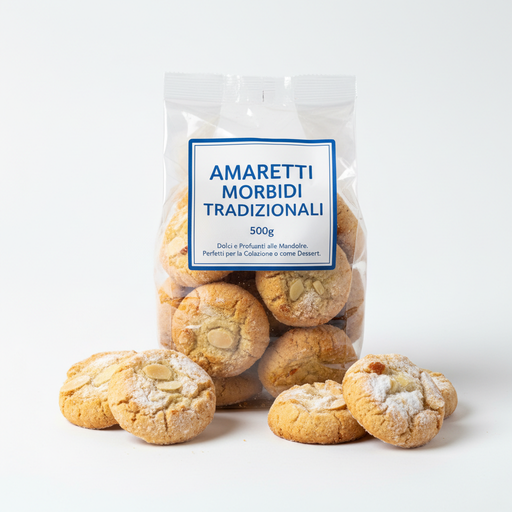
LAPA supplies all the ingredients for an authentic Piedmontese Bonet: crisp Italian amaretti, bitter cocoa powder, dark rum, fresh whole milk and free-range eggs, plus ready-made Bonet for restaurants that prefer to buy it portioned and frozen.
We deliver refrigerated 6 days a week throughout Switzerland (Ticino, Romandie, German-speaking Switzerland) within 1–3 working days, in both single-portion and large-tray formats for banquets and catering.
B2B orders on lapa.ch/shop or by phone: +41 76 361 70 21. Free technical advice for chefs and restaurateurs.