Artisan Panettone Milanese: the Art of Sourdough at the Service of Your Pastry Shop
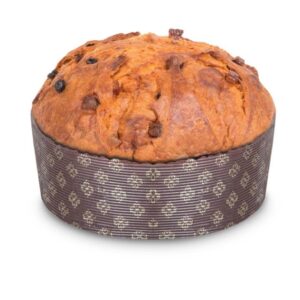
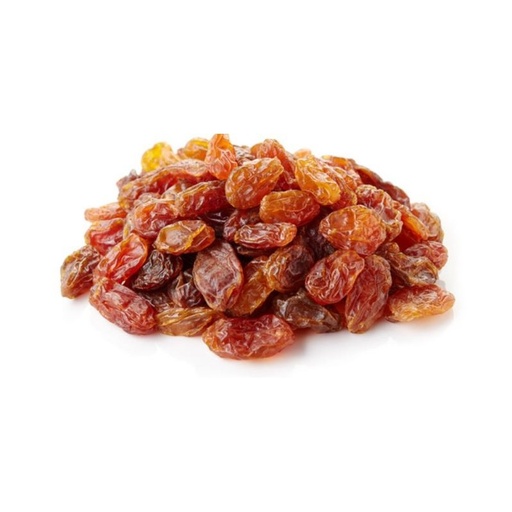
Artisan panettone milanese reigns as the undisputed master of Italian Christmas pastry. Its golden dome, soft and stringy crumb, the enchanting aroma of butter and vanilla, the generous presence of sultanas and candied fruit: panettone embodies an Italian Christmas the world over. Crafting a genuine artisan panettone milanese is one of the most ambitious challenges for any pastry chef: it demands skill, patience and ingredients of impeccable quality.
For hospitality professionals in Switzerland, offering an authentic artisan panettone milanese means bringing the excellence of Lombard pastry tradition to the table. LAPA, your trusted supplier with more than 3,000 Italian products and same-day delivery in German-speaking Switzerland for orders by 05:00 (1–3 working days in the rest of Switzerland), puts all the quality ingredients at your disposal: premium Italian butter, selected sultanas, artisan candied fruit, strong flour and professional sourdough starter.
History and Legend of Panettone Milanese
The origins of panettone milanese are lost between history and legend, which makes it all the more fascinating. The most famous legend dates back to the court of Ludovico il Moro, lord of Milan in the 15th century. The story goes that during a sumptuous Christmas banquet the court cook burned the intended dessert. A young kitchen boy named Toni saved the evening by offering a sweet bread made from kitchen leftovers: flour, butter, eggs, sultanas and candied citrus peel. The success was extraordinary and the pastry was christened Pan de Toni, hence the name panettone.
Documented history places the birth of the modern panettone in 19th-century Milan, when Milanese pastry chefs perfected the recipe by introducing sourdough starter and the characteristic double rising. Angelo Motta revolutionized the panettone in the 1920s, giving it the tall domed shape we know today and introducing the technique of turning it upside down after baking.
Centuries of evolution, from the Renaissance court of Ludovico il Moro to modern artisan workshops: panettone milanese has become the gastronomic symbol of an Italian Christmas, appreciated all over the world. In the LAPA catalogue you will find all the ingredients that made this tradition great.
The Ingredients of Artisan Panettone Milanese
The quality of the ingredients is the decisive factor that sets an artisan panettone apart from an industrial one. Butter, sultanas, candied fruit, flour and sourdough starter must all be top quality. LAPA selects the finest Italian raw materials for you. Here is the complete list for a 1 kg panettone.
First Dough
- 200 g sourdough starter refreshed at peak activity
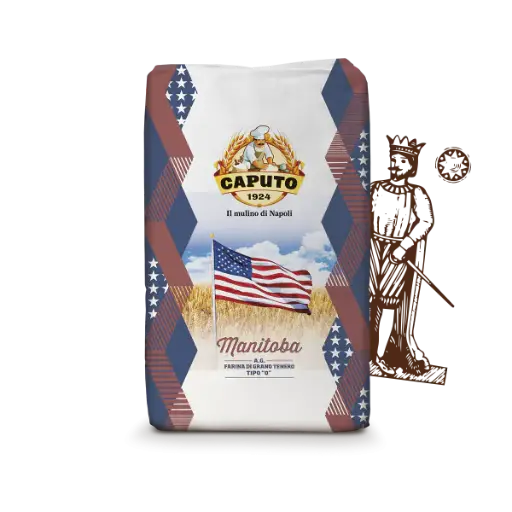
- 250 g strong Manitoba flour (W 380-400)
- 100 g caster sugar
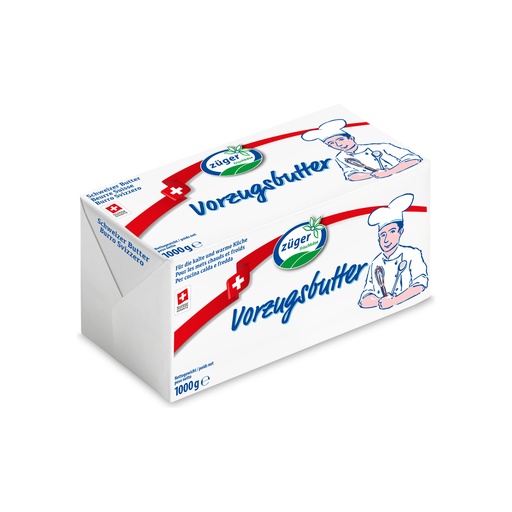
- 100 g premium Italian butter, at room temperature
- 3 egg yolks
- 80 ml water
Second Dough
- 150 g strong Manitoba flour (W 380-400)
- 80 g caster sugar
- 120 g premium Italian butter, at room temperature
- 3 egg yolks
- 8 g salt
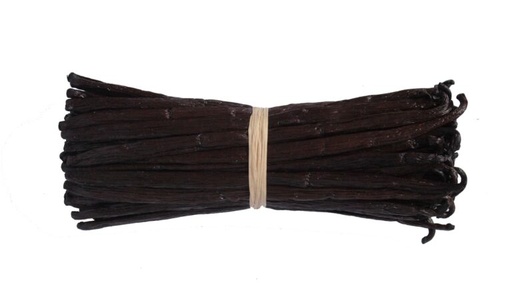
- 1 vanilla pod (seeds)
- Grated zest of 1 orange
- Grated zest of 1 lemon
- 200 g sultanas soaked in rum
- 150 g candied orange, diced
- 50 g candied citron, diced
The crucial point is the choice of butter and flour: the butter must be Italian, high quality, with at least 82% fat content, because it is what creates that golden, fragrant crumb that melts in the mouth. The flour must be a strong Manitoba with a W above 380 to withstand the long risings. LAPA offers certified Italian butter and professional strong flours, ideal for crafting an exceptional artisan panettone milanese.
Preparing the Artisan Panettone
Making an artisan panettone milanese is a long and demanding process that requires at least 36 hours from start to finish. The double rising is the heart of the method and allows no shortcuts.
Phase 1: Preparing the Sourdough Starter
- The sourdough starter must be refreshed at least 3 times in the 24 hours before preparing the panettone.
- Each refreshment consists of kneading the starter with an equal weight of flour and half its weight in water.
- The starter is ready when it triples in volume in 3 to 4 hours at 28 °C.
- A healthy starter has a mild, slightly tangy aroma, never excessively vinegary.
Phase 2: First Kneading and Bulk Fermentation
- Dissolve the starter in lukewarm water in the mixer and add the flour.
- Knead with the hook at medium speed for 10 minutes and add the sugar gradually.
- Add the egg yolks one at a time, waiting for each to be completely absorbed.
- Incorporate the room-temperature butter in small pieces, a little at a time, until fully absorbed.
- The dough must be smooth, glossy and very elastic, pulling away from the sides of the bowl.
- Place the dough in a covered container and let it rise at 26-28 °C for 12 to 14 hours, until it triples in volume.
Phase 3: Second Kneading with Sultanas and Candied Fruit
- Return the risen dough to the mixer, add the flour and knead until the gluten is fully developed.
- Add the sugar gradually, then the egg yolks one at a time, followed by salt, vanilla seeds and citrus zests.
- Incorporate the room-temperature butter in small pieces, a little at a time, until fully absorbed.
- When the dough is almost ready, add the well-drained sultanas and the lightly floured candied fruit.
- Knead briefly to distribute the fruit evenly without breaking it.
Phase 4: Shaping, Final Proofing and Baking
- Shape the dough into a smooth ball and place it in the paper panettone mould.
- Let it rise at 26-28 °C for 6 to 8 hours, until the dough reaches the rim of the mould.
- Score the surface in a cross and place a knob of butter in the centre.
- Bake in a static oven preheated to 170 °C for about 50 to 55 minutes for a 1 kg panettone.
- The internal temperature must reach 94 °C at the core.
- Immediately after baking, pierce the panettone at the base with two long skewers and turn it upside down.
- Leave the panettone hanging upside down for at least 8 to 12 hours until completely cooled.
Professional Tips and Artisan Secrets
Artisan panettone milanese is considered the most demanding pastry in Italian baking. Master bakers jealously guard secrets passed down from generation to generation, the ones that make the difference between a good panettone and a masterpiece. LAPA supports pastry professionals with selected ingredients that make excellence accessible.
- Sourdough starter is the soul of panettone: it must be tended daily with regular refreshments to maintain the right balance between lactic bacteria and wild yeasts.
- The temperature of the rising environment must remain constant between 26 and 28 °C: even slight variations compromise the result.
- Butter is always added last and in small pieces: it must be incorporated slowly so as not to break the gluten network.
- Sultanas should be soaked in rum for at least 12 hours and well drained before use, to prevent them from releasing liquid into the dough.
- Candied fruit is lightly floured before being incorporated, to prevent it from sinking to the bottom during baking.
Why Panettone Is Turned Upside Down After Baking
The upside-down hanging technique is one of the fundamental secrets of artisan panettone milanese. Immediately after baking, the panettone is pierced at the base with skewers and hung upside down. This operation prevents the dome from collapsing under its own weight while the still-warm, delicate dough cools and stabilizes. Without turning it over, the panettone would lose its characteristic tall, rounded shape, becoming flat and compact.
Artisan versus Industrial Panettone
The difference between an artisan panettone milanese and an industrial one is considerable. The artisan panettone uses sourdough starter and requires over 36 hours of processing with a slow double rising, while the industrial one uses baker's yeast and completes the process in a few hours. The artisan panettone contains quality butter, fresh eggs, selected sultanas and artisan candied fruit, whereas the industrial one often relies on margarine, artificial flavourings and preservatives. Choosing LAPA ingredients means guaranteeing your customers authentic artisan quality.
Quality LAPA Ingredients for the Perfect Panettone
The difference between a good panettone and an extraordinary one lies in the quality of the ingredients. For pastry professionals in Switzerland, LAPA is the ideal partner for accessing the finest Italian raw materials needed to craft an exceptional artisan panettone milanese.
With a catalogue of more than 3,000 authentic Italian products, LAPA supplies everything needed for a professional panettone: Italian centrifuged butter with at least 82% fat content, selected sultanas, artisan candied orange and citron, certified strong Manitoba flours, quality sourdough starter and vanilla pods. Same-day delivery in German-speaking Switzerland for orders by 05:00, and 1–3 working days in the rest of Switzerland, guaranteeing absolute freshness on every ingredient.
LAPA works exclusively with selected Italian producers, guaranteeing authenticity and traceability on every product. Whether you are an artisan pastry shop, a restaurant, a hotel or a catering service, LAPA is your supplier of quality Italian ingredients in Switzerland. Contact us at +41 76 361 70 21 for personalized advice.
Frequently Asked Questions about Panettone Milanese
How long does it take to prepare an artisan panettone milanese?
Complete preparation requires at least 36 to 48 hours: starter refreshments, first kneading with 12 to 14 hours of bulk fermentation, second kneading with 6 to 8 hours of final proofing, baking and 8 to 12 hours of cooling upside down. It is a process that tolerates no haste.
Can you make a panettone without sourdough starter?
Sourdough starter is the essential ingredient that gives artisan panettone milanese its open structure, complex aroma and long natural shelf life. Without sourdough you get a sweet bread, but not a true traditional panettone. Baker's yeast cannot develop the same organoleptic characteristics.
Why is panettone hung upside down after baking?
Turning it over is essential to maintain the tall, soft structure of the panettone. Straight out of the oven the crumb is still very delicate and would tend to collapse under its own weight. By hanging it upside down, gravity keeps the dome puffed during cooling, preserving the characteristic lightness and airy texture.
What is the shelf life of an artisan panettone milanese?
An artisan panettone made with sourdough starter naturally keeps for 30 to 45 days at room temperature, wrapped in its original bag. The natural fermentation of the sourdough produces organic acids that act as natural preservatives, with no need for chemical additives.
What is the difference between panettone milanese and pandoro?
Panettone milanese and pandoro from Verona are both great Christmas baked goods, but they differ profoundly. Panettone has a cylindrical shape with a dome, contains sultanas and candied fruit, and has a dough enriched with butter, eggs and sourdough starter. Pandoro has the shape of an eight-pointed star, contains no fruit and is dusted with icing sugar.
Can you freeze panettone?
Yes, panettone can be frozen whole or in slices for up to 3 months. It must be well wrapped in cling film and then in a freezer bag. To defrost, leave it at room temperature for 4 to 6 hours without removing the wrapping, so that the moisture settles on the surface rather than soaking into the crumb.
Order the Ingredients for Your Artisan Panettone
Are you ready to craft your artisan panettone milanese? LAPA puts at your disposal all the professional-quality ingredients you need: butter, sultanas, candied fruit, flour and sourdough starter selected from the best Italian producers. With more than 3,000 products in the catalogue and same-day delivery in German-speaking Switzerland for orders by 05:00 (1–3 working days in the rest of Switzerland), LAPA is the partner every professional pastry chef deserves. Call +41 76 361 70 21.
Order on our website: lapa.ch