Last updated: 28 May 2026
In 30 seconds: granita with brioche, the Sicilian breakfast
Sicilian granita is a semi-frozen dessert of water, sugar and flavouring (almond, coffee, lemon, mulberry, pistachio), churned at -2/-5 C to a smooth, spoonable texture with no large ice crystals. It is NOT a sorbet (which has more sugar and a denser body) and NOT an ice cream (which contains milk fat and air). In summer Sicilians eat it for breakfast, dipping a soft brioche col tuppo (the topknot brioche) into the cold granita.
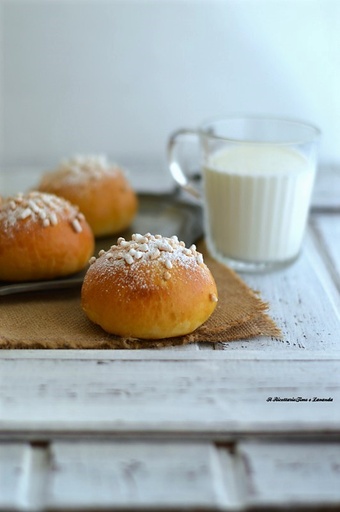
Brioche col tuppo is an enriched yeast bun with a small ball of dough on top (the tuppo, meaning bun of hair). Soft, slightly sweet, brushed with egg: it is the inseparable companion of granita. Below you will find a comparison table granita vs sorbet vs ice cream, the classic flavours, how to serve it at -3/-5 C in a Swiss bar, an FAQ and where to buy bases and brioche in Switzerland.
Comparison table: granita vs sorbet vs ice cream
| Feature | Sicilian granita | Sorbet | Ice cream |
|---|---|---|---|
| Base | Water + sugar + flavouring | Water + sugar + fruit | Milk + cream + sugar |
| Milk fat | 0% (except pistachio/almond paste) | 0% | 6-12% |
| Sugar | 20-25% | 28-32% | 16-20% |
| Churning | Slow, partial freezing | Full churning in batch freezer | Full churning + air (overrun) |
| Air (overrun) | None | Low (10-20%) | High (30-100%) |
| Texture | Grainy-creamy, spoonable | Compact, smooth | Soft, full-bodied |
| Serving temperature | -3/-5 C | -10/-12 C | -12/-14 C |
| Calories | 90-130 kcal / 100 g | 120-150 kcal / 100 g | 180-250 kcal / 100 g |
| Eaten with | Brioche col tuppo | End of meal | Cone, cup |
Which granita flavour to choose: the Sicilian classics
Each Sicilian province has its signature flavour. The choice depends on the season and on what your customers expect. Here are the traditional flavours that work in a Swiss bar.
| Flavour | Origin | Profile | Best season |
|---|---|---|---|
| Almond | Catania, Noto | Sweet, milky, marzipan notes | All year |
| Coffee | Messina, Catania | Bitter, intense, with cream on top | All year |
| Lemon | Whole island | Fresh, sharp, thirst-quenching | Summer |
| Mulberry | Etna area | Sweet-tart, deep purple | June-July |
| Pistachio | Bronte | Rich, nutty, intense green | All year |
| Strawberry | Whole island | Fruity, fresh | Spring-summer |
Origins: granita and the Sicilian breakfast tradition
Granita descends from the sherbet introduced to Sicily by the Arabs (9th-11th century): snow from Etna and the Madonie mountains, kept in stone pits called neviere, was mixed with fruit juice and sugar. The nivaroli were the men who harvested and traded the snow.
Until the 19th century granita was made by hand in the pozzetto, a wooden bucket with a zinc cylinder surrounded by ice and salt, stirred continuously to prevent large ice crystals. Today batch freezers replicate the same slow churning at -2/-5 C.
The breakfast pairing is the strongest Sicilian summer ritual: a glass of granita and a brioche col tuppo, eaten at the bar between 7 and 10 in the morning. In Catania the standard order is granita e brioche; in Messina you often get a double granita (e.g. coffee + almond) crowned with whipped cream.
Brioche col tuppo: the inseparable companion
The brioche col tuppo is a soft enriched bun made with flour W260-300, eggs, butter (or lard in the traditional Catania version), sugar and a touch of orange-blossom or lemon zest. The little ball on top, the tuppo, is what gives it the name (from the old word for a knot of hair).
It is not a French brioche: the Sicilian version is less buttery, lighter and slightly chewy, made to be dipped into the granita without falling apart. Served barely warm or at room temperature, never toasted.
Dough data for foodservice: hydration 50-55%, 15-18% butter, 12-15% sugar, 8-10 g fresh yeast per kg flour, 12-18 hour cold fermentation. Weight 60-90 g per piece. Baked at 180-190 C for 14-16 minutes.
How to serve granita at the right temperature and texture in a bar
The number one mistake in Switzerland is serving granita too cold and too hard, like a sorbet. Correct serving is -3/-5 C: the spoon goes in easily and the texture is grainy-creamy, never icy.
Practical rules for a bar or restaurant:
- Storage: keep the base at -3/-5 C in a granita machine or vertical churner; never in a -18 C freezer (it turns to a block).
- Stirring: the granita machine stirs continuously; if you store it in a tub, stir every 30-40 minutes with a fork.
- Glass: chilled tumbler, filled to the brim, served with a long spoon and the brioche on the side.
- Topping: whipped cream is optional, traditional on coffee and almond; never on lemon.
- Throughput: a 5-litre granita machine serves about 30-40 portions of 130-150 g.
FAQ - frequently asked questions about granita and brioche
What is the difference between granita and sorbet?
Granita has 20-25% sugar, no churning with air, a grainy-creamy texture and is served at -3/-5 C. Sorbet has 28-32% sugar, is fully churned in a batch freezer, has a compact smooth body and is served colder, at -10/-12 C. Granita is softer and lighter.
What is brioche col tuppo?
It is the traditional Sicilian breakfast brioche: a soft enriched yeast bun with a small ball of dough on top (the tuppo). It is dipped into the granita. Lighter and less buttery than the French brioche, with orange-blossom or lemon zest.
What are the classic granita flavours?
The Sicilian classics are almond, coffee, lemon, mulberry and Bronte pistachio. Almond and coffee are available all year; lemon and strawberry in summer; mulberry only in June-July. Coffee and almond are often topped with whipped cream.
At what temperature is granita served?
Granita is served at -3/-5 C, much warmer than ice cream (-12/-14 C). At this temperature the spoon glides in and the texture stays grainy-creamy. Too cold and it becomes an icy block; too warm and it melts into syrup.
How many calories does granita have?
Sicilian granita has 90-130 kcal per 100 g, depending on flavour: lemon and mulberry are the lightest (around 90-100 kcal), almond and pistachio the richest (120-130 kcal). It is lighter than both sorbet and ice cream because it contains no milk fat.
Can granita be made with a ready-made base?
Yes. Professional granita bases (powder or liquid) only need water and a granita machine: dose 150-200 g of base per litre of water, churn at -3/-5 C. This guarantees a constant result and saves preparation time in a busy bar.
How long does granita keep?
Made fresh, granita is best within the day, kept in the granita machine at -3/-5 C. The unprepared base (powder) keeps 12-18 months sealed. Liquid base keeps 6-9 months refrigerated. Brioche col tuppo keeps 1 day fresh, 2-3 months frozen at -18 C.
Where to buy granita bases and Sicilian brioche in Switzerland?
LAPA distributes professional granita bases (almond, coffee, lemon, pistachio, mulberry) and frozen brioche col tuppo throughout Switzerland, with refrigerated delivery. Order by phone +41 76 361 70 21 or on the shop.
LAPA: granita bases, ingredients and Sicilian brioche
LAPA is the Italian food wholesaler in Switzerland for bars, restaurants, pizzerias and gelaterias. 3,000+ authentic products, refrigerated delivery 6 days a week, direct supply chain with selected Sicilian producers.
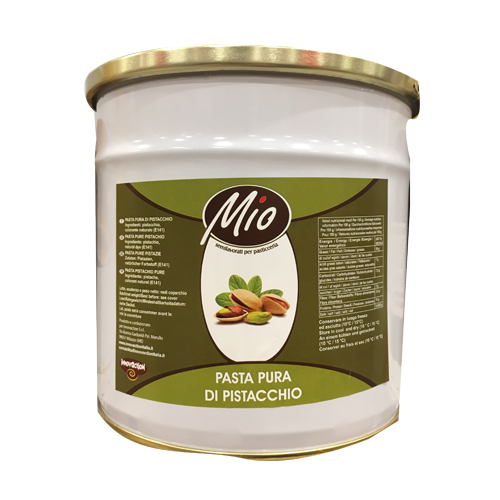
In the granita range: ready-to-use professional bases for almond, coffee, lemon, Bronte pistachio, mulberry and strawberry granita (price 8-16 CHF/kg of base, yield 5-7 litres per kg), frozen brioche col tuppo in 60 g and 80 g formats, Bronte pistachio paste, Avola almond paste, Sicilian lemons and candied fruit.
Orders on www.lapa.ch/shop or by phone +41 76 361 70 21. Free technical advice for bar and restaurant owners.