
Last updated: 28 May 2026
In 30 seconds: what is Sicilian cassata?
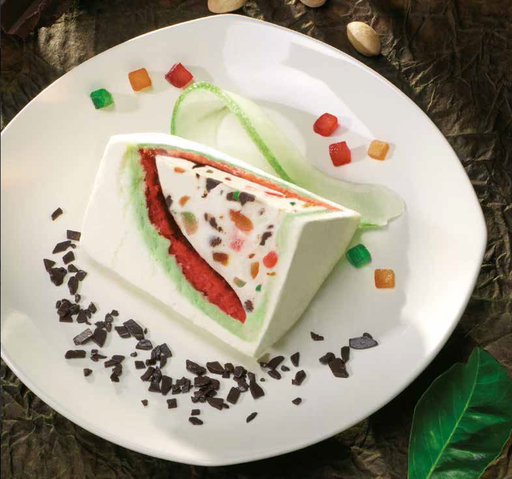
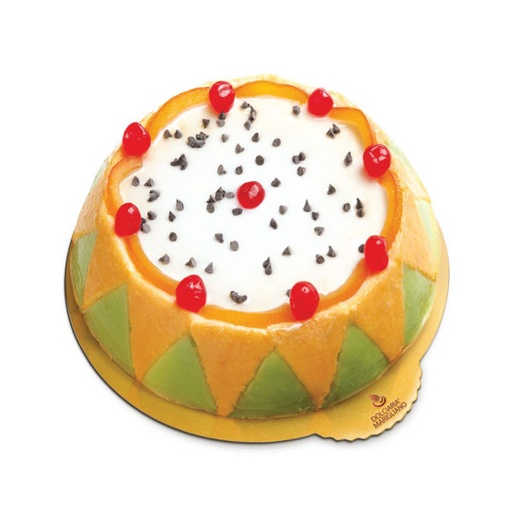
Cassata siciliana is the most iconic dessert of Sicilian pastry: a ring of sponge cake soaked in liqueur, filled with sweetened sheep's milk ricotta and chocolate chips, lined with green almond marzipan (pasta reale), coated with white sugar glaze and decorated with candied fruit. A single portion weighs 100-130 g and delivers 320-380 kcal per 100 g.
There are two main families: the covered cassata (cassata classica, with marzipan and candied fruit, served cold and never baked) and the baked cassata (cassata al forno, a shortcrust shell with ricotta filling, baked at 180 degrees C). Below you will find a comparison table, the DOP and IGP ingredients, history from Arab-Norman Palermo, serving advice, an FAQ and where to buy ricotta and marzipan in Switzerland.
Comparison table: classic, baked and mini cassata
| Feature | Classic covered cassata | Baked cassata (al forno) | Cassatine (mini) |
|---|---|---|---|
| Outer shell | Sponge cake + green marzipan | Sweet shortcrust pastry | Sponge + marzipan or shortcrust |
| Filling | Sheep ricotta + chocolate chips + candied fruit | Sheep ricotta + chocolate chips | Sheep ricotta + chocolate chips |
| Finish | White sugar glaze + candied fruit + sugar paste flowers | Icing sugar dusting | Glaze or icing sugar |
| Cooking | None (assembled cold) | Baked 180 degrees C, 35-40 min | None or short bake |
| Weight | 800 g - 2 kg (whole cake) | 800 g - 1.5 kg | 80-130 g each |
| Portion | 100-130 g | 100-130 g | 1 piece |
| Calories | 340-380 kcal / 100 g | 320-360 kcal / 100 g | 340-380 kcal / 100 g |
| Chilled shelf life (+4 degrees C) | 3-4 days | 2-3 days | 3-4 days |
| Best for | Buffet, banquet, showpiece | Daily counter, takeaway | Plated dessert, catering |
Origin: Arab-Norman Palermo
The cassata was born in Palermo during Arab rule in Sicily (ninth to eleventh centuries). The Arabs introduced sugar cane, citrus, almonds and the technique of candying fruit: the foundations of the dessert. The name probably comes from the Arabic qas'at, the round bowl in which it was assembled.
Under the Normans the convents of Palermo, especially the Martorana monastery, perfected the marzipan and the sponge base. For centuries it was an Easter cake: in 1575 the Diocesan Synod of Mazara del Vallo declared it too good and banned nuns from making it during Holy Week because it distracted them from prayer.
The modern covered version, with the green marzipan ring and the geometric candied fruit decoration, was codified around 1873 by Palermo pastry chef Salvatore Gulì, who added the sugar glaze and the candied fruit arrangement still used today.
The components: ricotta, sponge, marzipan, candied fruit, glaze
Sheep's milk ricotta. The heart of the cassata. It must be sheep ricotta, drained 12-24 hours, then sieved and worked with caster sugar (about 300 g sugar per kg of ricotta) until smooth and creamy. Cow ricotta is an acceptable substitute but loses the aromatic, slightly grassy note.
Sponge cake (pan di Spagna). A light egg-and-sugar sponge, no baking powder, cut into thin strips and soaked with a liqueur syrup (water, sugar and maraschino or rosolio). It lines the mould and separates filling from marzipan.
Marzipan (pasta reale or pasta di Martorana). Ground almonds and sugar in equal parts, coloured pale green with natural pistachio or plant dye. It forms the iconic outer ring and must stay soft and pliable, never dry.
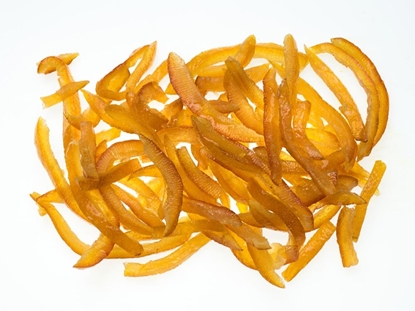
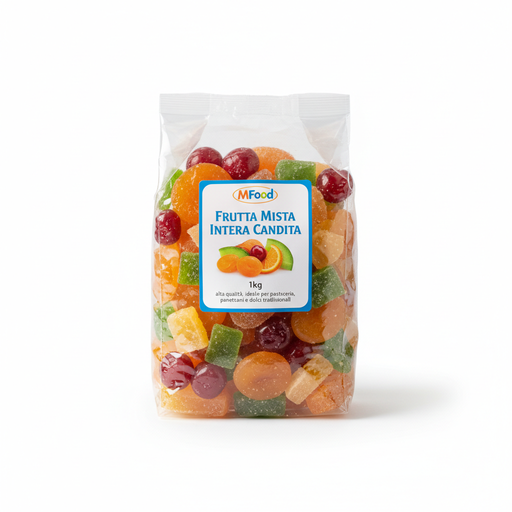
Candied fruit. Whole candied citrus (orange, citron, mandarin), candied pumpkin (zuccata) and candied cherries. Arranged in a radial geometric pattern on top, they are the visual signature of the cake.
Sugar glaze. Icing sugar and water (or lemon juice) cooked to a fluid white glaze, poured over the top in a single motion to seal the surface and give the glossy finish.
Covered cassata vs baked cassata: which to choose
The covered cassata (cassata classica) is the showpiece: cold-assembled, never baked, with marzipan, candied fruit and glaze. It is the banquet and Easter cake, visually spectacular but more laborious and fragile. Chilled shelf life 3-4 days.
The baked cassata (cassata al forno) is the everyday version: a sweet shortcrust shell filled with sweetened sheep ricotta and chocolate chips, baked at 180 degrees C for 35-40 minutes, dusted with icing sugar. Sturdier, easier to portion and to transport, ideal for a daily counter or takeaway. Chilled shelf life 2-3 days.
For Swiss foodservice, the cassatine (mini single portions of 80-130 g) are the most practical format: pre-portioned, easy to plate, ideal for catering, hotel buffets and banquets.
Conservation and service of the dessert
Chilled storage (+4 degrees C): the classic covered cassata keeps 3-4 days, the baked version 2-3 days. Always under a glass cloche or in a closed tray to protect the glaze and the candied fruit.
Freezing (-18 degrees C): the ricotta filling and sponge structure freeze well up to 2 months. Defrost slowly 6-8 hours in the fridge, never at room temperature (the glaze sweats and the candied fruit weeps).
Service: serve cold, never at room temperature. Cut with a blade warmed in hot water and wiped dry, for clean slices. Standard portion 100-130 g. Pair with a glass of Marsala, Passito di Pantelleria or Moscato.
Swiss food cost: 2.20-4.00 CHF per 120 g portion. Restaurant selling price 7-13 CHF per portion (food cost ratio 30-35%).
FAQ Sicilian cassata
What is Sicilian cassata?
A traditional Sicilian dessert of Arab-Norman origin: a sponge cake ring soaked in liqueur, filled with sweetened sheep ricotta and chocolate chips, lined with green marzipan, coated with white sugar glaze and decorated with candied fruit. Served cold, never baked in the classic version.
Difference between covered and baked cassata?
The covered cassata (classica) is cold-assembled with marzipan, candied fruit and glaze. The baked cassata (al forno) is a shortcrust shell with ricotta filling, baked at 180 degrees C for 35-40 minutes and simply dusted with icing sugar. The covered version is a showpiece, the baked one is the everyday counter cake.
Which ricotta is best for cassata?
Fresh sheep's milk ricotta, drained 12-24 hours and sieved, then worked with caster sugar (about 300 g per kg). Sheep ricotta gives the aromatic, slightly grassy note. Cow ricotta works as a substitute but is more neutral. Never use quark or mascarpone.
What is the green marzipan made of?
Pasta reale (or pasta di Martorana): ground almonds and sugar in roughly equal parts, coloured pale green naturally with pistachio or plant dye. It must stay soft and pliable to line the cake without cracking.
How long does cassata keep?
The classic covered cassata keeps 3-4 days at +4 degrees C, the baked version 2-3 days, always covered. It can be frozen up to 2 months at -18 degrees C; defrost 6-8 hours in the fridge, never at room temperature.
How many calories in a slice of cassata?
About 340-380 kcal per 100 g for the classic covered cassata, 320-360 kcal for the baked version. A standard 120 g portion is roughly 400-450 kcal, due to ricotta, sugar, marzipan and candied fruit.
Is cassata gluten-free?
No. The classic version contains the sponge cake (wheat flour) and the baked version the shortcrust pastry. It also contains eggs, milk, tree nuts (almonds, pistachio) and sulphites (candied fruit, liqueur). Gluten-free versions exist using rice or almond flour sponge.
Where to buy cassata, ricotta and marzipan in Switzerland?
LAPA distributes artisan frozen cassata and cassatine throughout Switzerland (Ticino, Romandie, German-speaking Switzerland) within 24-48 hours, plus all the ingredients to make it in house: sheep ricotta, almond marzipan, candied fruit and chocolate chips. Order on www.lapa.ch or by phone +41 76 361 70 21.
LAPA: ricotta, marzipan and ingredients for cassata
LAPA supplies artisan frozen Sicilian cassata, whole cakes and single-portion cassatine of 80-130 g, ready for banquets, hotels and catering. We also distribute every ingredient for in-house production: fresh sheep's milk ricotta, almond marzipan (pasta reale), candied citrus and pumpkin, chocolate chips, sponge cake and professional liqueurs.
LAPA is the Italian food wholesaler in Switzerland for restaurants, pizzerias and pastry shops: 3,000+ authentic products, refrigerated delivery 6 days a week, direct supply from selected Sicilian and Italian producers.
Delivery within 24-48 hours across Switzerland, B2B orders on www.lapa.ch/shop or by phone: +41 76 361 70 21.
Products for Cassata Siciliana

Frequently asked questions about the original recipe
What is the original Sicilian cassata recipe?
The answer is that the original recipe is a ring of liqueur-soaked sponge cake, filled with sweetened sheep's milk ricotta and chocolate chips, coated in green almond marzipan and covered with white sugar icing, decorated with candied fruit. It is assembled cold and never baked. A serving weighs 100-130 g, for 340-380 kcal per 100 g.
What ingredients make up the original recipe?
The answer is that the original recipe calls for drained, sieved sheep's milk ricotta with about 300 g of sugar per kilo, sponge cake soaked in maraschino or rosolio syrup, green-coloured almond marzipan, candied fruit (citrus, pumpkin, cherries) and an icing of icing sugar and water. The sheep's milk ricotta is the ingredient that defines the cassata's flavour.
Where does the original cassata recipe come from?
The answer is that the original recipe originated in Palermo during Arab rule (9th-11th century), which introduced sugar, citrus fruit and candying techniques. The modern coated version, with marzipan and icing, was codified in 1873 by pastry chef Salvatore Gulì. For centuries it was an Easter dessert, so tempting that nuns were forbidden from making it during Holy Week in 1575.
Is the original cassata recipe baked in the oven?
The answer is that the original recipe, the coated cassata, is never baked: it is assembled cold from sponge cake, ricotta, marzipan, icing and candied fruit. There is also a baked cassata, with a shortcrust pastry shell filled with ricotta and baked at 180 °C for 35-40 minutes, but it is a more recent variant meant for daily counter service, not the historical original recipe.