Last updated: 2026-06-10
Guanciale is cured pork jowl — the cut that gives carbonara, amatriciana and gricia their authentic flavour. In Switzerland you will rarely find it on a supermarket shelf: it is supplied by Italian specialty wholesalers such as LAPA, vacuum-packed in whole pieces of 1.2 to 1.5 kg, with refrigerated delivery and no minimum order.
What exactly is guanciale?
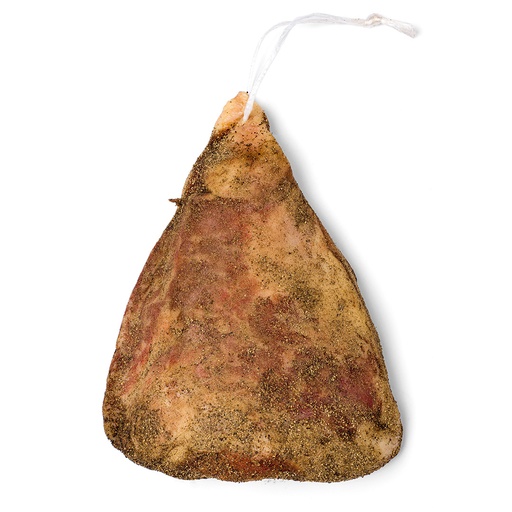
Guanciale comes from the pig's jowl ("guancia" means cheek in Italian). It is rubbed with salt and black pepper, sometimes herbs, and air-dried for a minimum of about three months. Unlike speck it is never smoked. Roughly 70 percent of its weight is fat — but it is a noble, low-melting fat that liquefies gently in the pan and becomes the actual sauce base of Roman classics. In German there is no exact word for it: "gereifte Schweinebacke" is the closest description, which is why the Italian name is used everywhere.
Why is guanciale so hard to find in Swiss supermarkets?
Guanciale is a slow product from mostly small Italian producers: long curing, whole pieces, limited volumes. Large Swiss retailers stock pancetta and bacon, but real guanciale appears only sporadically, if at all — which is why so many chefs search for "guanciale kaufen Schweiz" and end up empty-handed. The reliable route is a specialised importer that buys directly in Italy, keeps the cold chain unbroken and delivers to restaurants. That is exactly the gap LAPA fills for the Swiss gastronomy.
How do you recognise good guanciale?
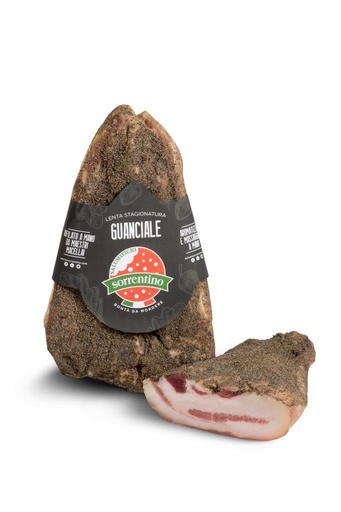
- The cut: a triangular piece from the jowl, with rind on one side — not a flat slab of belly sold under the wrong name.
- Curing time: at least 60–90 days; the best pieces age three months or more and feel firm, not rubbery.
- The fat: compact and porcelain-white with rosy streaks of lean meat. Yellowish, oily fat is a sign of poor storage.
- The crust: an honest coat of cracked black pepper (or whole peppercorns) that perfumes the meat, not just decorates it.
- The scent: clean cured-meat aroma with pepper and a faint sweetness — never sour or stale.
Guanciale, speck or pancetta: what is the difference?
| Product | Cut | Fat | Best use | Replaces guanciale? |
|---|---|---|---|---|
| Guanciale | Pork jowl | About 70%, low-melting | Carbonara, amatriciana, gricia | — |
| Pancetta | Pork belly | Leaner, in layers | Sauces, fillings, wraps | Only in an emergency: flatter taste |
| Speck | Pork leg, smoked | Lean with fat edge | Cold cuts, alpine dishes | No: the smoke takes over the dish |
How long does vacuum-packed guanciale keep?
Unopened, a vacuum-packed guanciale keeps for several months in the fridge at 0–4 °C — always follow the producer's best-before date on the label. Once opened, wrap it in breathable paper or a clean cloth and use it within two to three weeks; alternatively, portion it and re-vacuum the pieces. A thin white salt bloom on the surface is normal and wipes off. Cut portions can be frozen, but a slow fridge thaw is essential to protect the texture of the fat.
Which format makes sense for a restaurant kitchen?
For restaurants the whole vacuum-packed piece of 1.2 to 1.5 kg is the standard: it keeps longer, costs less per kilo than slices and lets you control the cut. With about 50–60 g of guanciale per carbonara, a 1.2 kg piece yields roughly 20–24 portions. Remove the rind, cut strips of about half a centimetre, then lardons — and render them slowly in a cold pan with no added oil: the melted fat is where the flavour of carbonara, amatriciana and gricia actually lives. In LAPA's range you find, for example, black-pepper guanciale by Montevecchio (ca. 1.2 kg) and whole-pepper guanciale by Sorrentino (ca. 1.5 kg).
Frequently asked questions
What is guanciale called in German?
There is no exact German word: the closest description is "gereifte Schweinebacke" (cured pork jowl). Producers, menus and shops across Switzerland keep the Italian name guanciale.
Can pancetta replace guanciale in carbonara?
Only as a stopgap. Pancetta comes from the belly, is leaner and tastes flatter; the jowl fat of guanciale melts lower and binds the sauce. The traditional Roman recipes call for guanciale.
How long does opened guanciale last in the fridge?
Wrapped in breathable paper or a clean cloth at 0–4 °C, an opened piece stays in shape for two to three weeks. For longer storage, portion it and vacuum-seal the pieces again.
Do you remove the rind and the pepper crust?
The rind yes, always, before cutting — it does not melt in the pan (but it is excellent in a pot of beans or broth). The pepper crust is a matter of taste: most chefs leave a thin layer for aroma.
Where can restaurants buy guanciale in Switzerland?
LAPA supplies restaurants, pizzerias and gastronomy across Switzerland with cured guanciale in whole vacuum-packed pieces, with refrigerated delivery and no minimum order — ordered today, on your worktop with the cold chain intact.
Put real guanciale on your menu
Your carbonara is only as good as your guanciale. Order it in the LAPA shop or call +41 76 361 70 21: refrigerated delivery across all of Switzerland, no minimum order.