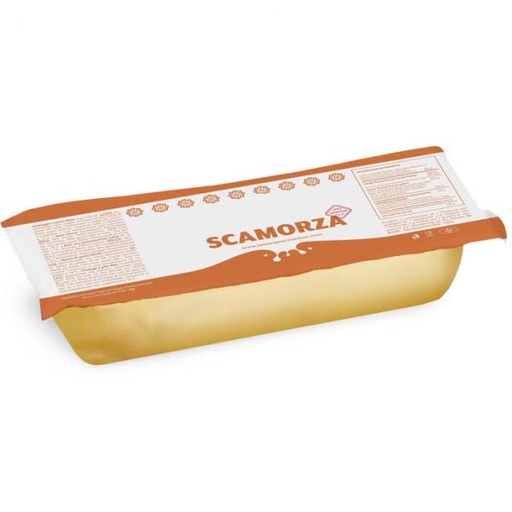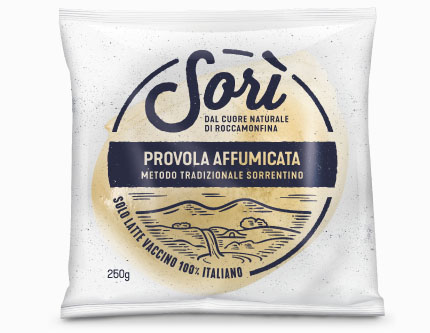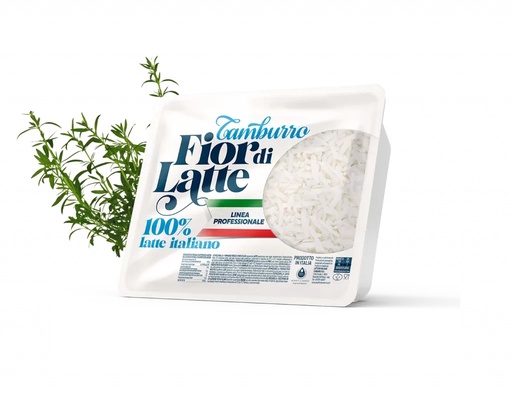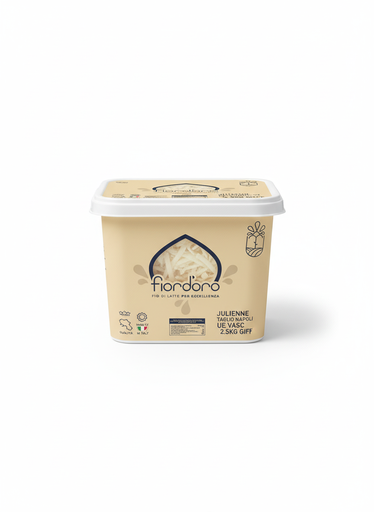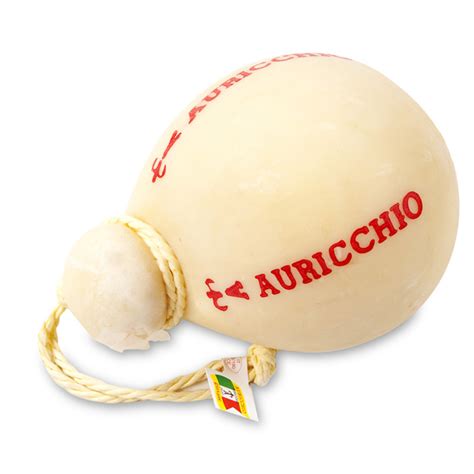
Provola is a southern Italian pasta filata cheese, a close cousin of fiordilatte: same stretched-curd technique, but a firmer paste holding less water. The smoked version is exposed to smoke from slowly burning straw or natural wood, which dries the surface, turns it amber and adds toasted aromas. In a pizzeria that is exactly the point: it melts and stretches without flooding the base.
Provola, scamorza or caciocavallo: what is the difference?
All three are pasta filata cheeses from the same family, separated by how long they age. Provola is the freshest and softest, ripened for a very short time. Scamorza is slightly drier and firmer, recognisable by its pear shape with the string tied around the neck. Caciocavallo ages far longer, with a compact paste and a much more intense flavour. Smoking is a variant, not a category: provola, scamorza and caciocavallo all exist in both white and smoked versions.
| Cheese | Ripening | Paste | Flavour | Best use |
|---|---|---|---|---|
| Fiordilatte | None, fresh | Soft, high water content | Milky, delicate | Classic Neapolitan pizza |
| Provola | Very short | Firmer, less water | Milky with a smoky edge | Rich pizzas, baked pasta |
| Scamorza | A few days | Drier, compact | More decisive | Grilling, gratin, focaccia |
| Caciocavallo | Months | Compact, firm | Intense, savoury | Grating, slicing, cheese board |
Why does provola hold up in the oven better than fiordilatte?
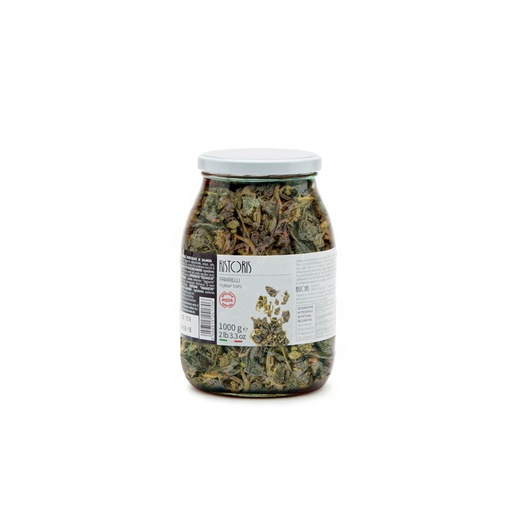
It comes down to water. Fiordilatte kept in brine or whey releases liquid as it bakes, and on a rich pizza that liquid pools on the surface. Provola holds less free water, so it melts and stretches without soaking the base. Its smokiness also survives the 400-450 °C of a wood-fired oven, where more delicate aromas simply vanish. That is why toppings with character — sausage and friarielli, mushrooms, potatoes, pancetta — are traditionally built on provola rather than fiordilatte alone.
Natural smoking or smoke flavouring: how do you tell?
Natural smoking leaves an uneven amber colour, slightly darker where the smoke hit hardest, and a toasted scent that sits behind the milk rather than covering it. Added smoke flavouring gives a suspiciously uniform colour and a sharper, flatter taste that stays on the palate. The label settles it: look for wording that names actual smoking rather than a smoke flavouring among the ingredients. Cut a piece: naturally smoked provola has a marginally drier rind and a paste that stays milky white inside.
How much provola per pizza, and how do you store it?
A 30 cm Neapolitan pizza usually carries 80 to 100 grams of cheese in total. When provola and fiordilatte are combined, the common working ratio is roughly seventy per cent fiordilatte for the stretch and thirty per cent provola for the aroma, so the smoke supports the tomato instead of burying it. Store between 2 and 4 °C. A whole provola log is cut into cubes or julienne and left to drain briefly before service: even a firm paste carries some surface moisture, and a minute on a rack saves a soggy base.
Frequently asked questions
What is the difference between provola and scamorza?
Ripening. Provola stays fresher and softer, scamorza is a little drier and firmer and is shaped like a pear with a string tied around the neck. Both exist white and smoked.
Are provola and provolone the same cheese?
No. Both are pasta filata, but provolone ages for months and comes in large formats with a mild or sharp profile, while provola is a small, fresh cheese eaten within days.
Can smoked provola go on a Neapolitan pizza?
Yes, and it is traditional on richer pizzas. Keep it away from the delicate Margherita, where fiordilatte alone lets the tomato and basil speak.
Where can I buy smoked provola in Switzerland?
LAPA supplies restaurants and pizzerias in Switzerland with smoked provola in logs and portions, alongside fiordilatte and caciocavallo, with refrigerated delivery and no minimum order.
Give your signature pizzas the cheese they deserve
Smoke, stretch and a base that stays dry: that is what provola brings to a pizza your guests will order again. See the LAPA selection or call +41 76 361 70 21. Refrigerated delivery, no minimum order.
Last updated: 5 August 2026