Friarielli are the flower shoots and tender stems of a Neapolitan variety of Brassica rapa — the same botanical species as cime di rapa. What changes is the part of the plant used and the taste: friarielli are sweeter and more delicate, cime di rapa more bitter. The name comes from the Neapolitan frijere, to fry: they are cooked in a pan with oil, garlic and chilli.
Friarielli or broccoli rabe: what is the real difference?
Botanically there is none: both come from Brassica rapa subsp. sylvestris. The difference lies in cultivation, local climate and, above all, in what ends up in the pan. Friarielli use only the flower shoots and the thinnest part of the stem, which makes them sweeter; cime di rapa also include the leaves, which carry most of the bitterness. Regional names complete the confusion: friarielli in Campania, cime di rapa in Puglia, broccoletti in Lazio, rapini in Tuscany.
| Name | Region | Part used | Taste | Signature dish |
|---|---|---|---|---|
| Friarielli | Campania (Naples) | Flower shoots and tender stem | Sweet, lightly bitter | Sausage and friarielli, pizza |
| Cime di rapa | Puglia | Flower shoots and leaves | Markedly bitter | Orecchiette with cime di rapa |
| Broccoletti | Lazio | Flower shoots and leaves | Medium bitter | Sautéed side dish |
| Rapini | Tuscany and international use | Shoots and stems | Variable | Broccoli rabe on menus abroad |
What are friarielli called in English, German and French?
In English they are broccoli rabe, rapini or broccoli raab; in German Stängelkohl (also sold as Rapini or Brokkoli-Rabe); in French brocoli-rave or rapini. None of these names is exact, because the Neapolitan friariello is a local selection with its own sweetness. On a menu the best move is to keep the word friarielli and add one line of explanation: guests remember the name, and it signals the dish is the real thing.
Jar, tin, frozen or cream: which format should you buy?
| Format | How it works in service | Best for |
|---|---|---|
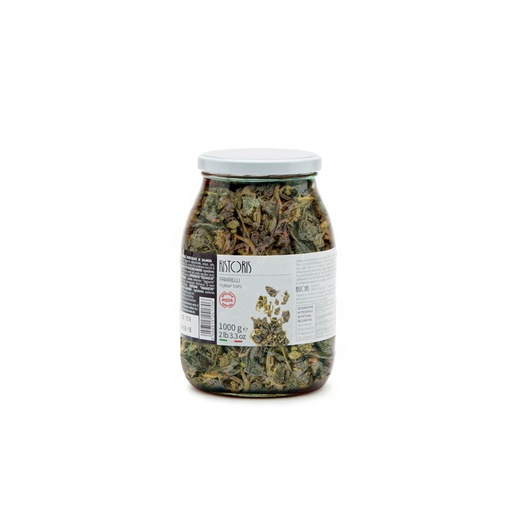
| Glass jar in oil (about 1 litre) | Ready to use, drain and go | Pizza, panuozzo, fast service |
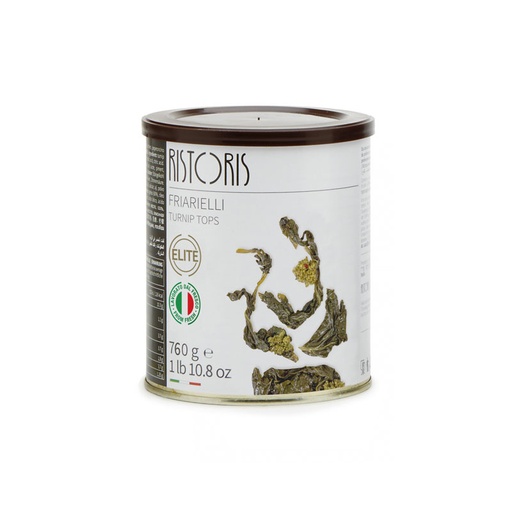
| Tin in oil (760 g) | Lower cost per portion, large pack | High volume pizzerias |
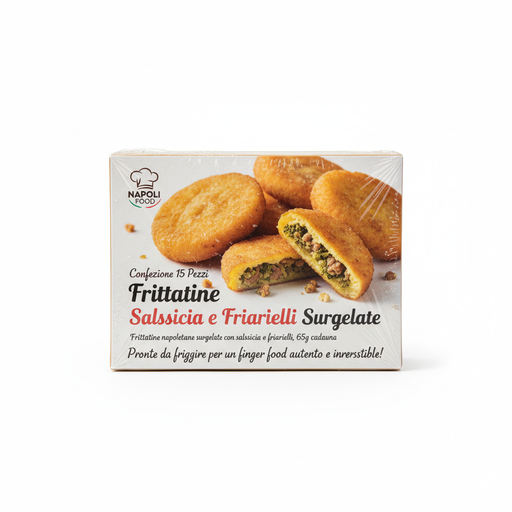
| Frozen field friarielli (1 kg) | Closest to fresh, needs a pan | Side dishes, plated courses |
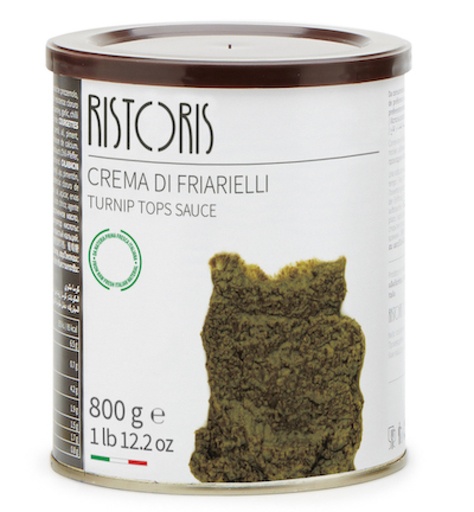
| Cream (800 g) | Spreadable, uniform, no waste | Pizza base, focaccia, pasta sauces |
The rule of thumb: jars and tins for anything that goes onto a pizza, frozen for anything served as a vegetable in its own right, cream for spreading and for sauces. Many kitchens keep two formats — a jar for the line and the cream for the base — because they cover different jobs.
Why are friarielli almost always bought preserved?
Because fresh friarielli have a short season: roughly from October to March, with the cold of winter making them sweeter. Outside that window fresh product is either unavailable or expensive and irregular. Preserved formats — in oil or frozen — give the same yield twelve months a year, which is what a pizzeria needs if sausage and friarielli stays on the menu all year round.
How do you cook friarielli in a professional kitchen?
Hot pan, good olive oil, a crushed garlic clove and a little chilli. Friarielli in oil are already cooked: five to seven minutes are enough to flavour them and drive off the excess liquid. Frozen ones go straight into the pan without thawing and need about ten to twelve minutes. Never boil them for long — water takes away both colour and character. Their classic partners are sausage, smoked provola, panuozzo and, of course, pizza.
Frequently asked questions
Are friarielli the same as cime di rapa?
Same botanical species, different result. Friarielli use only shoots and tender stems and taste sweeter; cime di rapa include the leaves and taste distinctly more bitter.
What is friarielli in English?
Broccoli rabe, rapini or broccoli raab. None is a perfect match: the Neapolitan friariello is a local selection, sweeter than standard rapini.
Are friarielli in a jar already cooked?
Yes. Those in oil are ready to use: drain them and give them a few minutes in the pan with garlic and chilli, or put them straight onto the pizza.
Where can I buy friarielli in Switzerland?
LAPA supplies restaurants and pizzerias in Switzerland with Neapolitan friarielli in jars, tins, frozen and as a cream, with refrigerated delivery and no minimum order.
Keep sausage and friarielli on your menu all year
Sausage and friarielli is one of those dishes guests order again. Choose the format that matches your service — jar for the pizza line, frozen for the plate, cream for the base — and it works twelve months a year. See the LAPA selection or call +41 76 361 70 21. Refrigerated delivery, no minimum order.
Last updated: 5 August 2026